ChatGPT: Deep Dive · Research and Analysis
Dig Deeper With Deep Research
Run research you can trust
Research Like a Pro
In the previous lessons, you used ChatGPT and Codex to research information as part of a larger task and turn it into a finished deliverable.
Deep Research feature puts the investigation itself at the center. It lets you choose the sources, review a proposed research plan, follow the work as it runs, and receive a documented report with citations or source links.
Choose one
When does Deep Research make more sense?
From Search Engine to Research Partner
But how do you use AI to level up your research?
One thing to avoid here is using AI like Google: type a question, scan the results, move on.
Deep Research works differently. Instead of returning links, it synthesizes sources, draws conclusions, and writes a structured report for you. That's more powerful, and it means a bad brief produces something that looks credible but isn't useful.
How to Access Deep Research
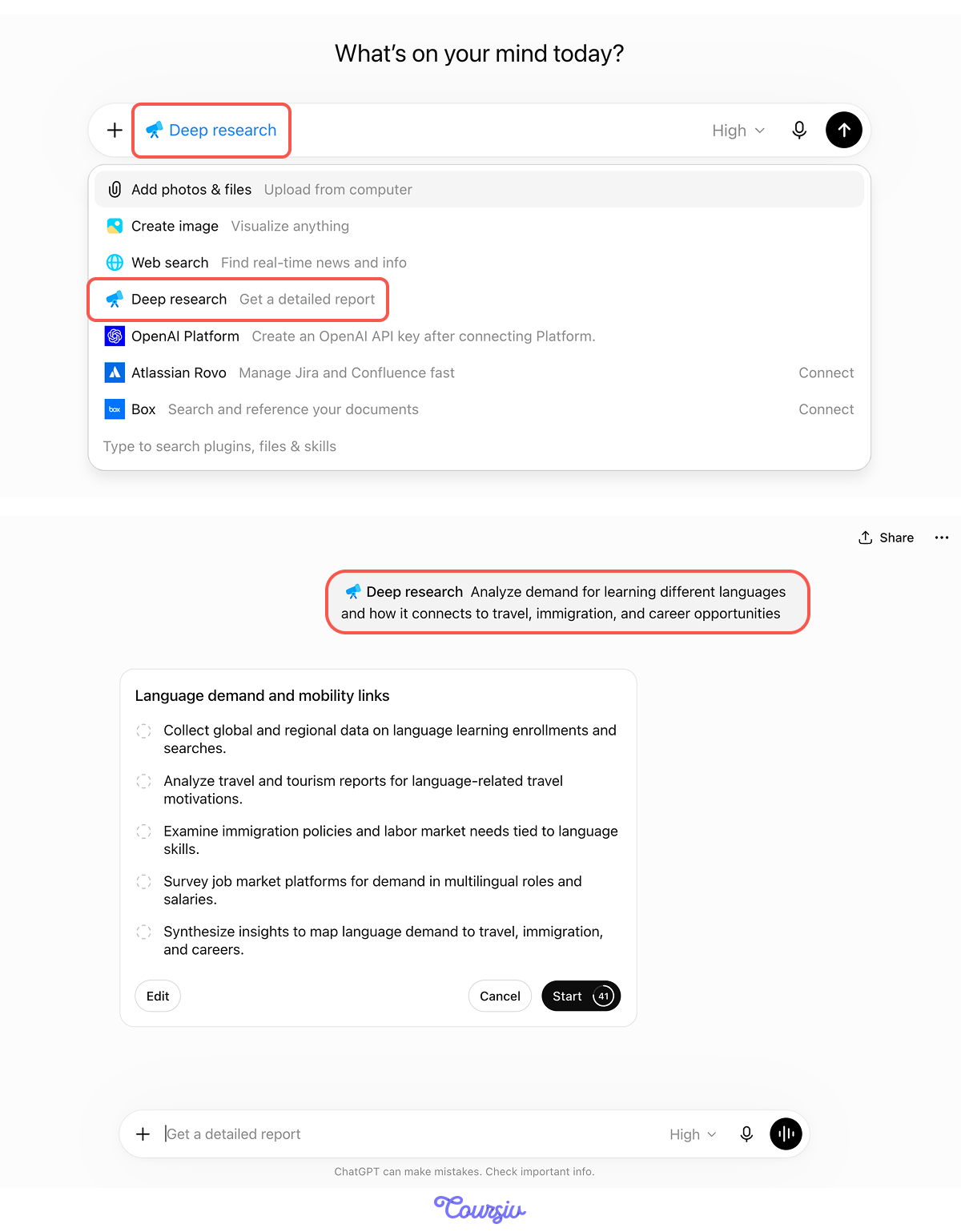
To start a session, open a new chat, click the dropdown next to the input field, and select Deep Research.
As you run your prompt, you'll see the interface shift: instead of a standard reply, ChatGPT will suggest a multi-step research run that you can start immediately or edit if needed. ChatGPT will proceed to browse sources and compile findings before responding.
Deep Research is built for tasks that would take a human researcher hours: competitive landscape analysis, literature reviews, due diligence on a vendor, and tracking regulatory changes across markets.
If the task requires pulling from multiple sources, synthesizing findings, and producing a structured output, this is the right tool.
Briefing Like a Researcher
Think of Deep Research the way you'd think of briefing a junior analyst. If you walked up to a capable researcher and said, "Find me something on AI productivity tools," you'd get something generic. Give them a scope, specific questions, source constraints, and a deadline — you'd get something usable.
A Deep Research brief has four components:
- Key questions = what specifically do you need to know
- Constraints = time range, source types to exclude
- What to flag = conflicts of interest, weak methodology
- Output format = structure, length, level of detail
practice preview
Interactive practice
Fill in the blank
Your client wants an independent assessment of AI productivity tools before a team rollout. Complete the brief.
Those constraints are doing real work. "Exclude vendor-published content where possible" and "flag commercial interests" are instructions people often skip, and they prevent the report from filling up with sponsored findings dressed as research.
The Report Comes Back
Deep Research returns a comprehensive 20-page report: tool comparisons, adoption statistics, user satisfaction data, productivity claims across five platforms.
It's well-structured, fully cited, and reads like something you could attach to a client email right now.
But don't attach it yet. A well-structured report with citations is not the same as a verified report.
Why that happens: AI models are trained to give clear, confident answers. They're rewarded for sounding right, not admitting uncertainty. So when the evidence is thin or the source is weak, they don’t slow down or hedge. The response still sounds just as fluent and certain as it would with strong evidence.
Deep Research builds on this by adding web browsing, which can increase confidence, but doesn't guarantee accuracy.
The model can read and cite a source, and still misinterpret it — especially with niche topics, recent data, or complex queries. AI fills the gaps through pattern matching instead of verification. Clear, fluent writing can sound right, but actually turns out wrong.

One Figure That Needs a Closer Look
Your next job is to read it as an editor. You notice that one claim stands out in the report: a specific AI tool saves users an average of 3.2 hours per week. It has a footnote and looks exactly like the kind of concrete, sourced finding your client needs.
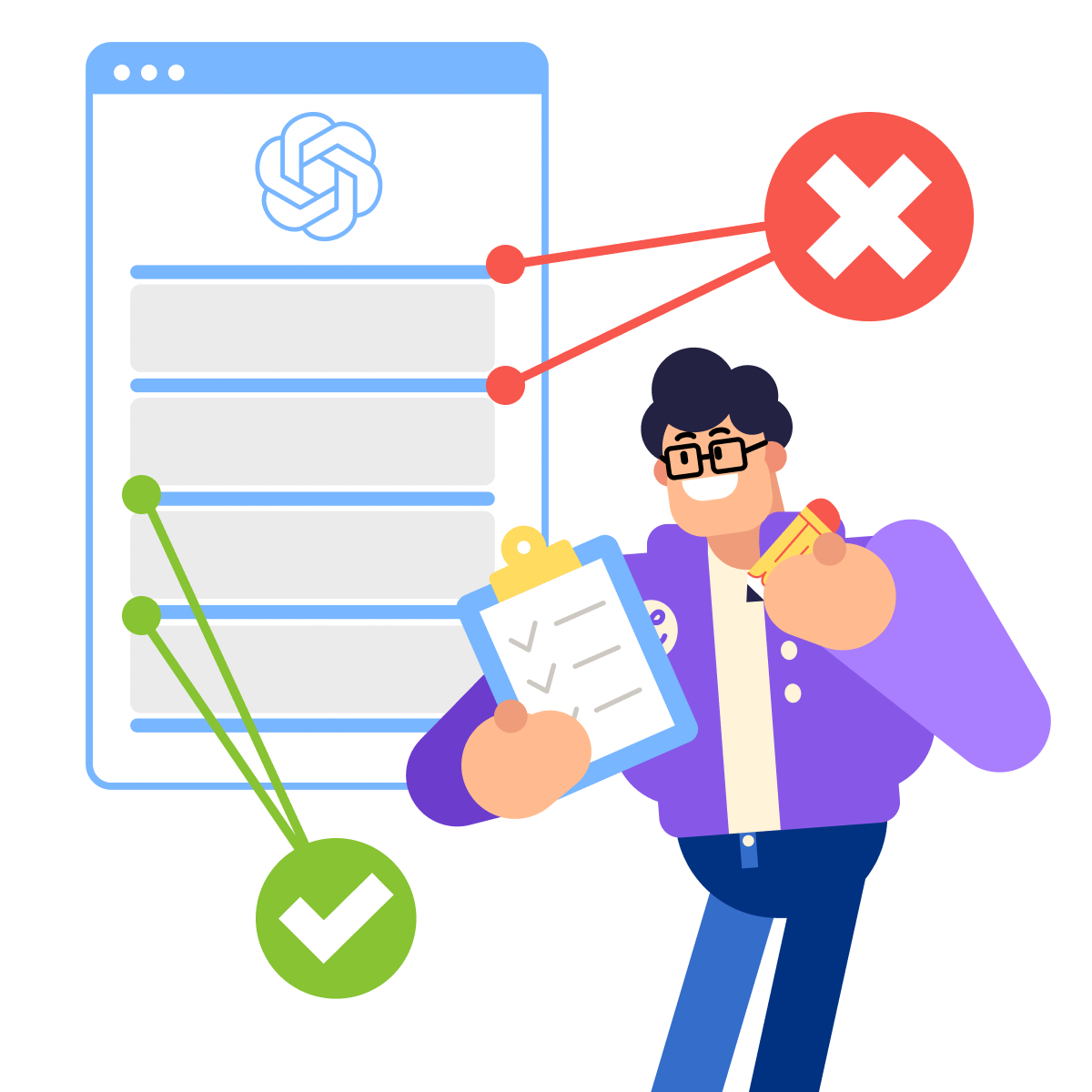
Any fact Deep Research provides has a footnote. Click on it, and a "Sources" panel opens on the right. You can examine what websites ChatGPT pulled information from.
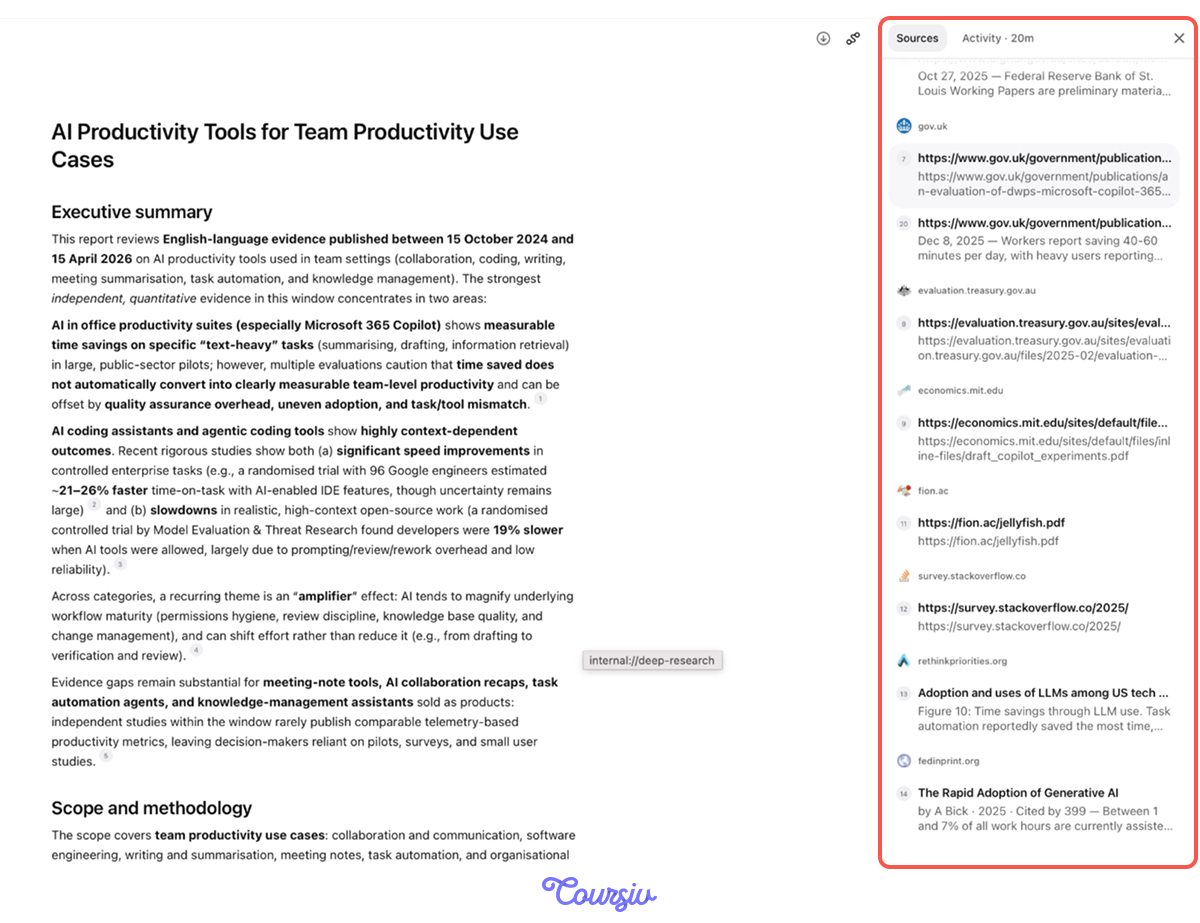
Trace the 3.2 hours claim. Click the footnote. You find out that the source is a white paper, published by the tool's own vendor, based on a survey of their existing paying customers.
The methodology is in the appendix: self-reported data, no control group, respondents who had already decided the tool was worth paying for.
Choose one
The 3.2 hours/week productivity claim traces back to a vendor-funded white paper with self-reported data and no control group. You need to deliver a recommendation to the client. What's a better approach?
Evaluating the Rest of the Report
The 3.2-hour figure was the most obvious problem. Now run a full evaluation pass, not just for bad sources, but for gaps. What did the brief ask for that the report quietly skipped?
One thing before you do: switch off Deep Research for this step. If you leave it on, ChatGPT will run another research cycle instead of reviewing what's already there.
practice preview
Interactive practice
Fill in the blank
Complete the prompt to evaluate the full report for weak sourcing and missing coverage.
Two more weak sources and one significant gap — no failure cases, despite the brief explicitly asking for them. Deep Research didn't flag what it couldn't find, and didn't tell you the gap existed.
A Deep Research report won't tell you what it missed. If your brief asked for failure cases and the report has none, that's not a clean finding. Always check coverage against your original brief, not just the report's own structure.
Choose one
After evaluating a Deep Research report, you find it has no coverage of a topic your brief explicitly requested. What's the right move?
What Goes to the Client
After the evaluation pass, the deliverable has changed. The 3.2-hour figure is out. Two more weak claims are caveated. The failure cases section is filled from the follow-up brief. What's left is a report that your client can make a decision with.
The client asked for an independent assessment. What you're delivering is one, and not because Deep Research produced it, but because you evaluated what it brought back and made editorial calls before anything left your hands.
Deep Research output Is raw intelligence and not a finished deliverable. Source quality, gap coverage, and conflict-of-interest checks happen after the report comes back as a defined step in the workflow.
Select all that apply
Which of these tasks is Deep Research best suited for?
A useful test: does the task require reading across multiple independent sources and drawing conclusions from them? If yes, Deep Research is the right tool.
If you already have the sources and just need synthesis, that's a different prompt in a standard chat.
- Brief Deep Research like a researcher. Define scope, questions, sources, and flags. Vague briefs lead to off-target answers.
- Confidence does not mean accuracy. Be wary of vendor data, self-reports, and hidden incentives.
- Check for gaps yourself. Validate coverage against your brief, not the report structure. This comes as a separate step of the process.
- Flag weak evidence clearly. A transparent gap is better than a misleading conclusion.
What's Next?
You've learned to brief Deep Research and evaluate what it brings back. In the next lesson, you'll dive deeper into data analysis with ChatGPT to make the right, data-driven business decision.
Let's keep going!