Midjourney · Explore Techniques and Styles
Combining Modes
Try various modes and commands at once
From Adjustments to Decisions
Up to this point, you've learned how individual parameters behave. You've adjusted them, compared results, and seen clear cause-and-effect changes.
In real projects, however, you rarely tweak one parameter in isolation. You make decisions under constraints — balancing consistency, expression, clarity, and delivery requirements at the same time.
This lesson is about building style systems: parameter setups that solve real creative problems reliably.
A Shift in Thinking
In earlier lessons, the question was simple: What does this control do?
Now the question changes:
- What is the goal?
- What must stay consistent?
- Where can variation exist?
- When does creativity help — and when does it hurt?
You'll work through scenarios where there is no perfect answer — only better or worse tradeoffs.
Scenario: Brand Campaign Carousel
Your men's cosmetics campaign from the previous lesson created a buzz and gained wide attention!
Now you're hired as a brand designer for a women's hair products campaign. The client needs images for a social carousel, and they used this sample of your work as a style reference.
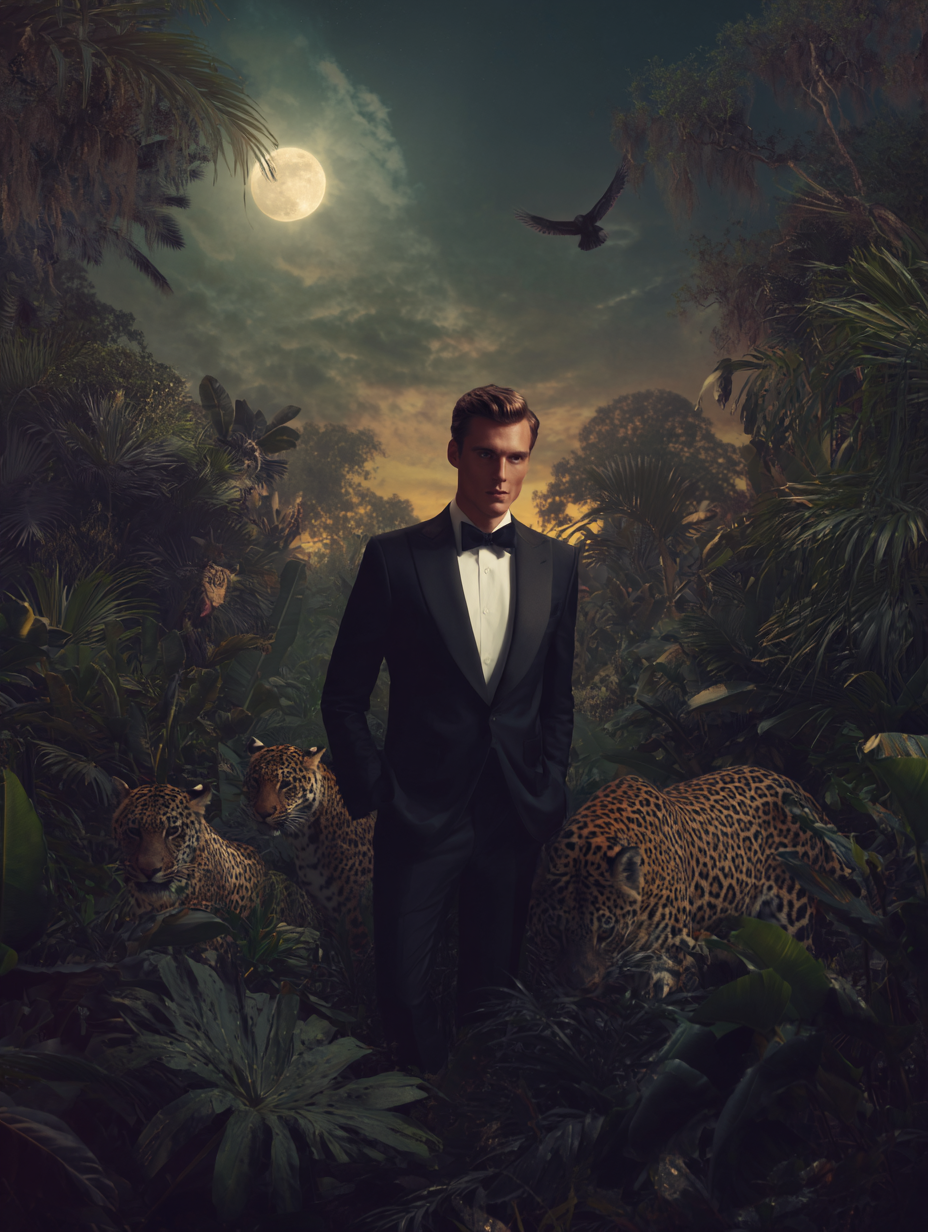
You can easily reuse it as a style reference in Midjourney with a new prompt, as well as set up how heavily this stylization is applied using the "--sw" parameter.

practice preview
Interactive practice
Fill in the blank
Generate the first set of images for the campaign.
First Attempt Feedback
You generated several images using the prompt above. Individually, they look good — but together, something feels off.
Feedback from the client:
- Images feel different in mood
- They are far from the reference and don't look consistent
Let's fix this now!
practice preview
Interactive practice
Fill in the blank
Generate another set of images for the campaign.
Choose one
What changes did you notice in the second group of images when you adjusted the style weight?
Great job on the campaign! Your client is now satisfied with the result: the images are consistent and various at the same time.
Let's now look at another scenario.
Scenario: Expressive, but Trustworthy
Now imagine you're working as an editorial illustrator on a magazine cover. The art director wants something expressive and artistic — but still clear and professional.
practice preview
Interactive practice
Fill in the blank
Generate the first version of the magazine cover. First, you play it safe and try low chaos and low weirdness.
"Too controlled feels dull," your client says. Let's take a risk and try another one with more variety!
practice preview
Interactive practice
Fill in the blank
Generate the second version of the magazine cover. Now you experiment with adding more chaos and weirdness.
Pushing the Limits
Too abstract starts to feels confusing. These versions are visually interesting — but the message becomes harder to read.
This isn't failure! It's useful information.
Select all that apply
Which adjustments help restore clarity without removing expression?
practice preview
Interactive practice
Fill in the blank
Generate the third version of the magazine cover. Now, you reduce chaos and weirdness and ask Midjourney to follow the prompt precisely.
Why This Works
You didn't eliminate creativity — you framed it. Expression now supports the idea instead of overwhelming it.
This kind of balance is common in editorial work, where visuals must attract attention and communicate. Good job!
Seeing the Pattern
Let's pause and look at what you've done so far.
- In the campaign carousel, you adjusted parameters to protect consistency
- In the editorial illustration, you adjusted parameters to balance expression and clarity
The prompts were different. The parameters were different. But the thinking process stayed the same — that's the shift this lesson is about.
practice preview
Interactive practice
Match pairs
Tap a left item, then a right item to match.
- Real projects need thinking. The question shifts from "what does this control do?" to "what's the goal, and which parameters get me there?"
- Style weight ("--sw") helps maintain consistency. Raise it when you need images to stay close to a reference across a set, such as a campaign or carousel.
- Chaos and weirdness open up expression. Together they push variation and unexpected interpretations — powerful for editorial and creative work, risky when clarity matters.
- Balance beats extremes. When results become too controlled or too abstract, adjusting one or two parameters restores the middle ground without losing the concept.
- The thinking process stays the same across projects. Identify what must stay consistent, where variation helps, and which parameter shifts the tradeoff.
Great Job!
You can now:
- Build repeatable visual systems
- Balance creativity with constraints
- Diagnose problems before fixing them
- Move confidently between exploration and delivery
This is the core skill behind professional AI image workflows!
What's Next
In the next lesson, you'll discover a faster way to explore ideas: generating multiple visual directions at once, evaluating them side by side, and refining the winner precisely.
Time to explore smarter!