Midjourney · Practice Midjourney Use Cases
Images for Blogs and Social Media
Make your postings stand out in the feed
Images That Carry the Story
Images for blogs and social media play a different role than ads or product photos. They don't need to shout. They need to support ideas, guide attention, and extend the story beyond words.
In this lesson, you'll learn how to illustrate blog articles and social content using images that feel intentional, readable, and connected to the message. Let's go!

How Editorial Images Work
Strong editorial and social images usually aim to:
- Clarify an idea
- Set a mood
- Create visual rhythm across content
- Keep the viewer reading
They rarely show the exact thing being described. Instead, they suggest, frame, or symbolize the message.
Scenario: Illustrating a Blog Article
Imagine you're illustrating a blog article about work-life balance rules. You want something conceptual, not literal.
practice preview
Interactive practice
Fill in the blank
Create an image to introduce the article.
Choose one
Do the images you got meet the requirements for perfect blog visuals?
Choose one
What do you think is the main issue with this illustration?
Why This Happens
Abstract prompts sound good to humans — but they give Midjourney very little to work with.
Phrases like "representing balance," "conceptual illustration," "symbolic image" don't describe a scene. Midjourney works best when it can see the metaphor, not invent it.

Turning an Idea into a Visual Scene
Instead of asking for a concept, describe a physical situation that embodies the idea. For the topic of balance, that might mean:
- Two contrasting environments or objects
- One shared frame
- A clear boundary or transition
Let's try that!
practice preview
Interactive practice
Fill in the blank
Describe the metaphor as a clear, physical scene.
Choose one
What makes the second image stronger for a blog article?
Why This Works for Blogs
Strong blog illustrations don't explain the article. They visualize tension, show contrast, and create emotional context.
A clear metaphor lets readers understand the theme instantly — and then continue reading.

practice preview
Interactive practice
Match pairs
Tap a left item, then a right item to match.
Applying This to Social Media
The same rule applies to social media — but with tighter framing. Images still support storytelling, but the story must land faster and clearer.
The challenge is the same as before — visualizing an idea — but the execution changes.
Scenario: Instagram Page for a Local Bakery
Let's say you're managing an Instagram page for a neighborhood bakery. They bake great bread and pastries and want to grow on Instagram.
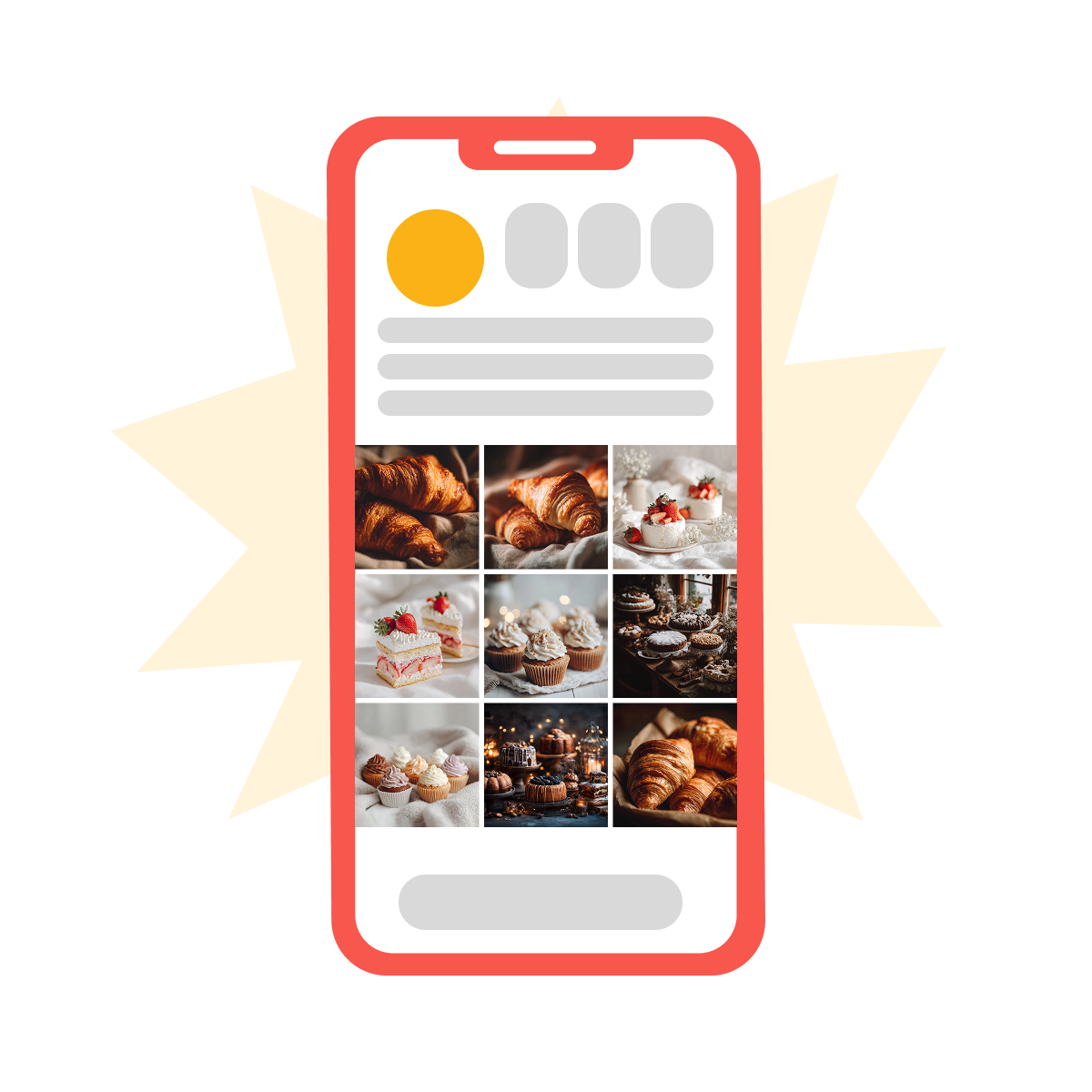
Choose one
What's the main problem with this page?
What Actually Builds Connection
For local businesses, people don't just buy products. They connect with routine, craft, atmosphere, small human moments.
Instead of asking "What do we sell?", ask: "What does being here feel like?"
practice preview
Interactive practice
Fill in the blank
Let's fix the feed with smart prompting! Turn the bakery page into a visual story.
Choose one
Why does this image work better for social media?
Stories Are About Presence
Another place to apply this approach is Stories! That's where followers feel inside the business and close moments matter more than polished scenes!
practice preview
Interactive practice
Fill in the blank
Capture a quiet, human detail.
Make the Image Come Alive!
Remember the "Animate Image" feature? This is the perfect moment to try it out!
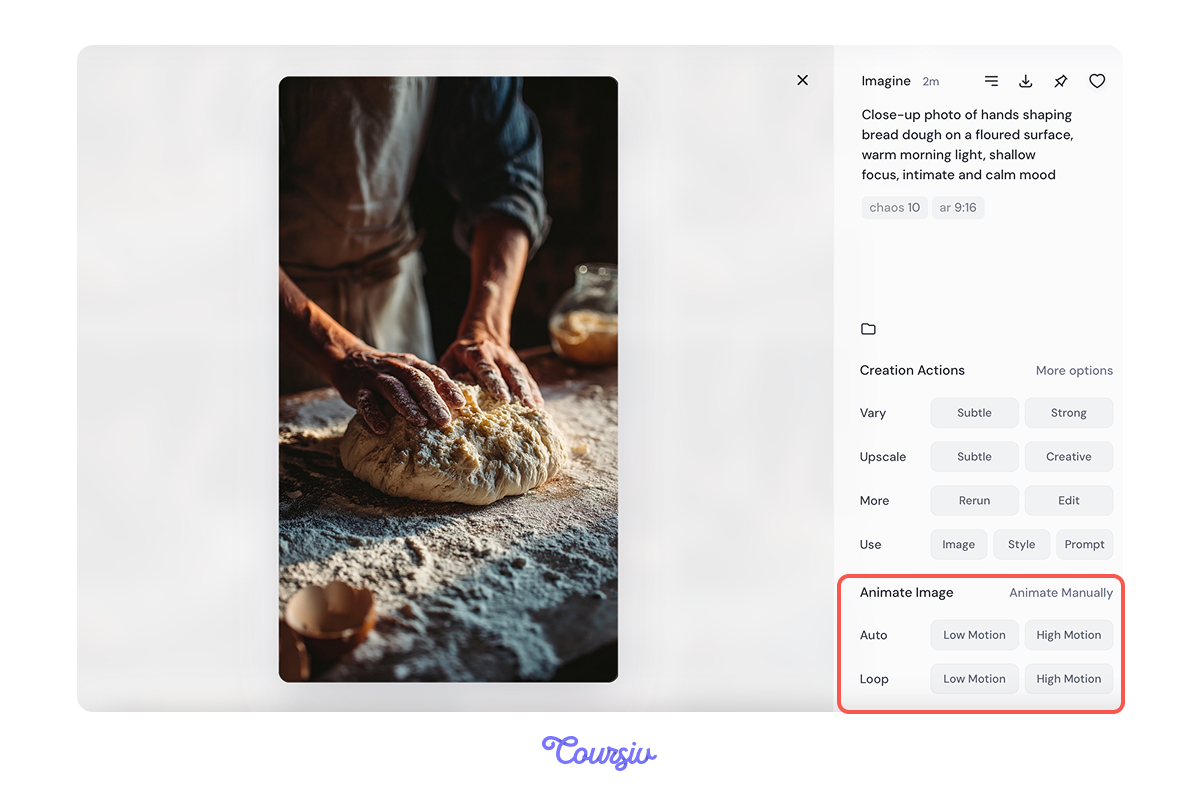
Here is what we get if we try the "High Motion" option!

Select all that apply
What changed between the feed image and the Story image?
Notice the Difference
The feed image shows the place. The Story image shows the process. Together, they tell a story no cake photo can!
What to Show Instead of "Another Cake"
For local business pages, strong content often includes:
- Preparation moments
- Tools and textures
- Early or late hours
- Traces of work (for instance: for the bakery it's flour, crumbs, steam!)
- Quiet scenes between customers
These images feel lived-in — and memorable.
Why Some Images Stay With Us
The strongest images in this lesson didn't rely on novelty or polish. They worked because they had a clear metaphor, a specific moment, and a mood that matched the message.
It's about shifting from showing content to communicating meaning. When an image shows how something feels, not just what it is, it becomes memorable.

Originality Comes From Perspective
Original visuals don't come from unusual subjects. They come from small human details, traces of process, and contrast between spaces or states. These choices make images feel lived-in and intentional — instead of generic or templated.
- Editorial images support the idea. They clarify, set the mood, and keep viewers reading.
- Metaphors need visual anchors. Use clear contrasts, frames, or boundaries.
- Social images need faster storytelling: same idea, tighter framing.
- Show the feeling, not just the product. Atmosphere and small human moments build connection.
- Original visuals come from perspective. Details, process, and contrast make images feel lived-in.
Next Steps
In the next lesson, we'll explore how to illustrate stories — creating visuals that work for books, comics, and other engaging formats! See you then!