Midjourney · Practice Midjourney Use Cases
Stunning Product Images
Create clean, consistent product shots
When Details Sell the Product
Product images are judged differently than any other visuals.
They must look clean, intentional, and trustworthy. Every shadow, highlight, and angle affects how the product is perceived — premium or cheap, clear or confusing.
In this lesson, you'll learn how to design product images deliberately in Midjourney by combining parameters with the right lighting, composition, and viewpoint choices.

Select all that apply
What do you think makes product images powerful?
What Makes a Product Image Work
Strong product images usually share a few qualities:
- The product is easy to read at a glance
- Lighting highlights form and texture
- Nothing distracts from the subject
- The framing feels intentional
Achieving this isn't about adding more words. It's about setting the right constraints.
Think Like a Product Photographer
Before writing the prompt, imagine a real photoshoot. Ask yourself:
- Where is the light coming from?
- How close is the camera?
- Is the product centered or staged?
- What mood should the product communicate?
Your prompt should answer these questions clearly.
Scenario: Premium Skincare Product
You're creating visuals for a premium skincare brand. The images will be used on a website and in ads. The product should feel:
- Clean
- Modern
- High-end
We'll start with a safe, controlled setup.
practice preview
Interactive practice
Fill in the blank
Build a clean foundation for the product image.
Choose one
Why is raw mode often useful for product images?
Why Raw Mode Matters for Products
For product images, you usually want less interpretation, not more. Raw mode reduces Midjourney's tendency to:
- Over-stylize
- Exaggerate colors
- Add artistic textures
This makes surfaces, edges, and proportions feel more realistic and controlled.
Lighting That Sells
Lighting is one of the most important elements in product photography. In prompts, lighting affects:
- How glossy or matte a product looks
- How textures appear
- How premium the image feels

practice preview
Interactive practice
Fill in the blank
Adjust the prompt to emphasize texture without harsh shadows.
Dramatic lighting creates many unnecessary sharp shadows around objects. For clean product images, soft, controlled lighting usually works best.
practice preview
Interactive practice
Fill in the blank
Adjust the prompt to emphasize texture without harsh shadows.
Composition: Less Is More
Product images rarely benefit from complex scenes. Let's see how removing distraction helps improve the pictures.
practice preview
Interactive practice
Fill in the blank
Remove distractions from the composition.
Choose one
Why is "no props" useful here?
Clean composition means:
- One clear focal point
- Balanced spacing
- No competing elements
In prompts, this often means explicitly saying what isn't there.
Choosing the Right Viewpoint
Viewpoint controls how the product is perceived. Common product viewpoints include:
- Eye-level → neutral and realistic
- Slight top-down → clean and commercial
- Close-up → material and detail focus
Extreme angles often distract unless used intentionally.
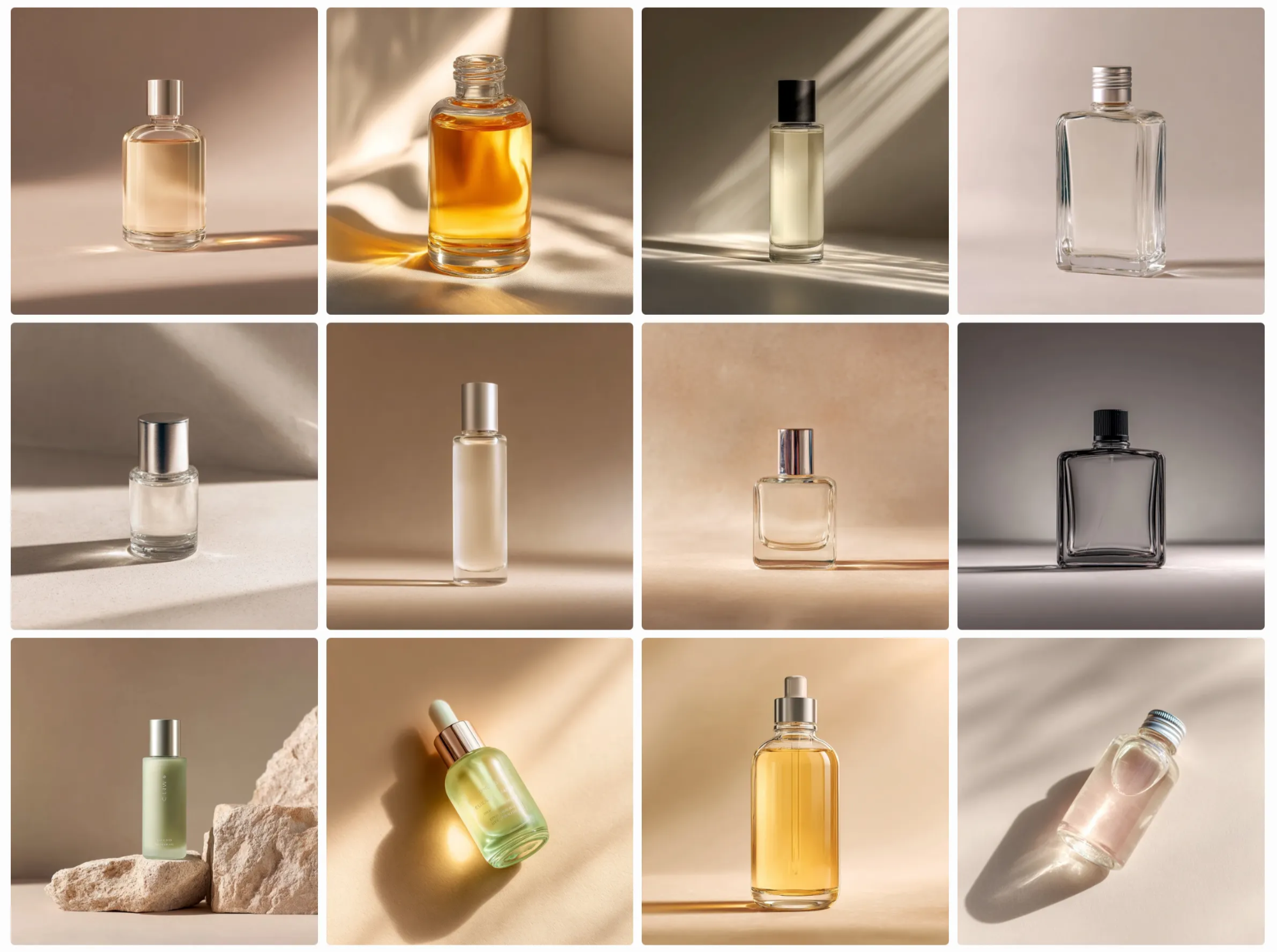
Choose one
Which setup is best for clean, commercial product images?
Select all that apply
When is it appropriate to explore and try different parameter values for product images?
Exploration vs Delivery
You might still explore early on — trying different moods or materials. But once a direction is chosen, product images should be:
- Repeatable
- Consistent
- Predictable
That's when tightening parameters matters most.
Designing Product Images with Intent
Strong product images aren't about luck. They come from:
- Intentional lighting
- Simple composition
- Clear viewpoint
- Restrained parameter choices
Once these elements work together, Midjourney behaves like a controlled studio — not a guessing machine.
- Strong product images come from constraints: a clear focal point, controlled lighting, nothing that distracts.
- Raw mode keeps details clean. It reduces over-stylization, exaggerated colors, and artistic textures.
- Simple composition wins in product imagery. Center the product, balance the spacing, use "--no props" to exclude distractions.
- Match viewpoint to purpose. Eye-level for realism, slight top-down for commercial, close-up for detail.
- Explore early, tighten late. Experiment during ideation, lock parameters once the direction is chosen.
What You Can Do Now
You can now:
- Design clean, commercial-ready product images
- Choose lighting and angles intentionally
- Combine parameters to protect realism
- Scale your setup across multiple products
This approach works for skincare, tech, fashion, and beyond!
Next Steps
As we move further, you'll explore how to create extraordinary marketing visuals that attract customers, drive engagement, and make your CTA stand out.
See you!