Communicating With AI · From Prompts to Reliable Results
Working With AI: Iteration & Prompt Chaining
Learn how to turn single prompts into reliable AI workflows
You've Made It to the Final Lesson!
Five lessons in, and you've gone from understanding why AI gives generic answers to guiding its reasoning, controlling its outputs, and showing it exactly what you want. Great job!
This last lesson is about putting it all together — building workflows that don't just work once, but reliably every time. Let's finish strong!

You came into this guide wanting to get better results from AI. You've learned that the quality of those results doesn't come from the tool — it comes from how you communicate with it. Role, context, instructions, question framing, examples, reasoning prompts: each one is a lever you now know how to pull. That's not a small thing.
Choose one
You asked AI to help draft something, and the output isn't quite right — the tone is off. What's the better move?
Refining Instead of Restarting
Say you asked AI to help you draft a project proposal, and the tone came back too formal. Starting over means rebuilding everything from scratch. A follow-up — "rewrite this in a more conversational tone, same structure" — gets you what you need in one line, with all the context still intact.
Iterative Prompting
Iterative prompting means treating a prompt as a starting point rather than a final ask. You send an initial request, evaluate the response, and refine from there. Each follow-up builds on the last.
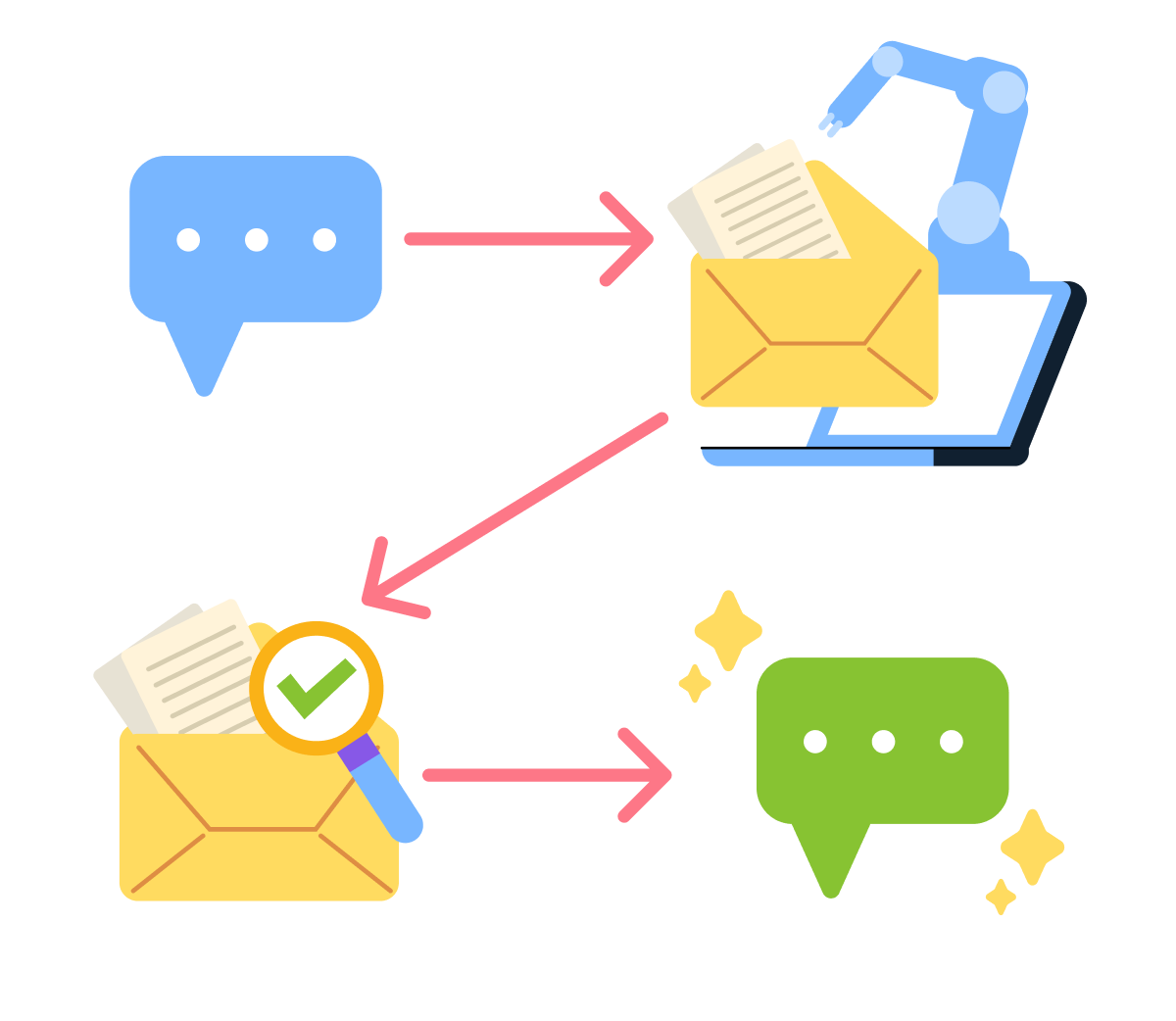
Nobody writes a perfect brief on the first try — and you don't need to.
The goal isn't a flawless first prompt. It's a useful first output that gives you something real to react to. A rough draft you can redirect is more valuable than a perfect prompt you spend ten minutes crafting.
Each refinement takes one line. The output gets better. The effort stays low.
practice preview
Interactive practice
Fill in the blank
Send an initial request to get a starting point.
A solid starting point, but it reads a little generic. Instead of starting over, refine it.
practice preview
Interactive practice
Fill in the blank
Add a follow-up to sharpen the tone and make it more specific.
One follow-up made the bio go from serviceable to specific. The context stayed intact, only the instruction changed. That's iterative prompting in practice.
Iterative prompting works the same way for any goal. If you came here wanting to use AI for writing, each draft gets sharper with one follow-up at a time — tone, length, structure — without ever starting over. If your goal was planning or decision-making, each refinement narrows the output toward your specific situation rather than a generic answer.
Prompt Chaining
Iterative prompting refines a single output over time. Prompt chaining takes a different approach — it breaks a complex task into a sequence of smaller prompts, where the output of one becomes the input for the next.
If Generated Knowledge prompting felt like a two-step process, prompt chaining is that idea scaled up to an entire workflow.
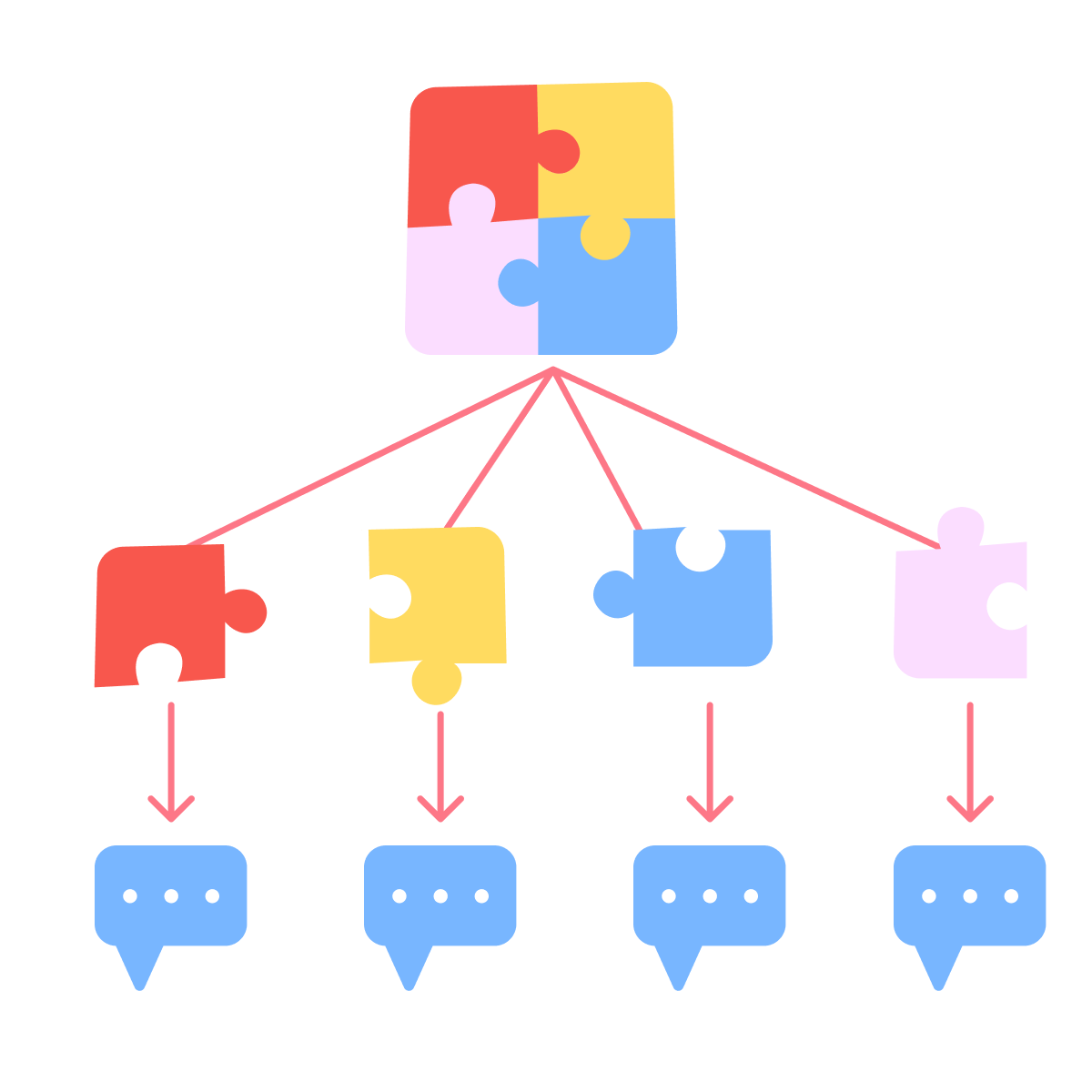
Complex tasks often fall apart when handled as one big prompt, because the AI has too many things to balance at once, and the output ends up shallow across all of them. Chaining solves this by giving each step its own focused prompt, so every part of the task gets the attention it needs.
practice preview
Interactive practice
True / False
Decide whether this task works better as a single prompt or a chain of prompts.
Here's what a chain looks like for a real task. Say you want to plan a career change but have no idea where to start. A single prompt asking "help me change careers" returns something too broad to act on. A chain looks different:
Step 1: "What factors typically determine whether a career change is the right move?" → surfaces the right questions to ask yourself.
Step 2: "Based on those factors, what should someone with a background in [current field] who wants to move into [target field] focus on first?" → narrows it to your situation.
Step 3: "Turn that into a 90-day action plan with weekly milestones." → formats it into something you can actually follow.
Each step produces something the next one builds on — and you can check, adjust, or redirect at any point before moving forward.
The output of each prompt becomes the raw material for the next. Nothing is wasted, and nothing needs to be rebuilt. Each step moves the task forward.
Let's try it with a real example. Say you have a career report and want to use it to strengthen your CV and figure out what to work on next — two different questions that each deserve their own focused prompt.

practice preview
Interactive practice
Fill in the blank
Send the first prompt to pull out only what matters.
The relevant skills and achievements are now isolated. Use them directly as the input for the next step.
practice preview
Interactive practice
Fill in the blank
Use the extracted quotes to answer a specific question about what to prioritize next.
With two focused prompts, you got one coherent output. That's what chaining produces: reliable, auditable results that show exactly where the output comes from and let you refine any step independently if something isn't landing.
Select all that apply
Which of these tasks would work well as a prompt chain rather than a single prompt?
Putting the Whole Course Together
Every technique in this course is a layer:
- Role, context, and instructions shape the input.
- Question framing controls the depth.
- Examples anchor the format.
- CoT and Generated Knowledge improve the reasoning.
- Iteration and chaining turn single outputs into reliable workflows.
None of these techniques work in isolation — and you don't need to use all of them every time. The skill is knowing which combination fits the task. A quick question needs a focused prompt. A complex decision needs CoT. A multi-part project needs a chain. A recurring output needs an example to anchor it.
practice preview
Interactive practice
Put in order
You want to plan and write a newsletter issue using AI. Arrange these prompts in the most logical order.
Good work rarely comes from getting it perfect on the first try — with or without AI. With AI, the speed of each iteration changes. The best workflows are built the same way good work always gets built: foundation → structure → execution → refinement. AI just makes every step faster.
- Refine, don't restart: Follow-up prompts preserve context and get you to the right output faster than rebuilding from scratch.
- Iterative prompting moves you forward step by step: Start with a first pass, evaluate, and sharpen. Each follow-up builds on the last.
- Prompt chaining breaks complex tasks into focused steps: The output of one prompt becomes the input for the next, so every part of the task gets the attention it needs.
- The techniques in this course work as layers: Match the combination to the task. Not every prompt needs every technique, but knowing all of them means you always have the right one available.
What's Next?
You've completed the course! You now have a full set of techniques for communicating with AI. Now, explore other courses on Coursiv — where you'll apply these techniques to specific tools and real-world tasks, going deeper on the workflows that matter most to you.