Communicating With AI · From Prompts to Reliable Results
Zero-Shot vs. Few-Shot Prompting
See why one example can completely change AI output
Show, Don't Just Tell
Think about the last time you tried to describe a color to someone without pointing to anything. "It's kind of a warm blue — but not too bright, more muted, like a faded denim." Now imagine just holding up a swatch.
That's what this lesson is about: instead of describing what you want from AI, you show it — and everything gets easier.

You want to write a weekly newsletter, and the AI keeps producing something that sounds like a corporate memo — structured, polished, and completely unlike you. You've tried adding a role and context. The problem isn't what the AI knows, but that it has never seen what your writing actually looks like.
You've Already Been Doing Zero-Shot Prompting
Everything you've learned so far — adding a role, giving context, framing questions with "why" and "how" — has been a form of zero-shot prompting. You give the AI a clear instruction, and it responds. It's just a well-constructed ask with no examples or demonstrations.

Zero-shot works remarkably well for a huge range of tasks. AI tools are trained on enormous amounts of text, so straightforward requests — summaries, translations, classifications, rewrites — rarely need anything more than a good instruction to produce a usable result.
Choose one
Would you need to include an example to get a useful response here: "Translate this sentence into Chinese: 'I have a meeting at 3 p.m.'"?
But zero-shot has a ceiling. When the output format, tone, or structure matters to you specifically — when you'd recognize a wrong answer the moment you saw it — a good instruction isn't enough.
Few-Shot: Show Before You Ask
This is where few-shot prompting comes in. LLMs are powerful, but they don't know your preferences unless you show them. Few-shot prompting means including one or more examples in your prompt before making your actual request.

The AI reads the examples, picks up the pattern — format, tone, structure, length — and applies it to your new request. It's the difference between telling a colleague, "write it in a friendly tone," and handing them a message you've already sent for them to match.
And unlike role or context, which shape what the AI focuses on, examples shape what the output actually looks like. That's what makes this technique different from everything covered so far. It gives the AI not just a direction but a clear target.
Here's what that looks like in practice. Say you keep asking AI to write birthday messages for friends, and they all come out sounding like greeting cards.
- Without an example: "Write a birthday message for my friend."
- With an example: "Write a birthday message for my friend. Here's the tone I'm going for: 'Another year of you being the person I call when everything goes sideways — glad you exist.'"
The second prompt produces something in the right register because the AI now knows what register means to you.
Choose one
A person wants the AI to write product descriptions in their brand's specific tone — punchy, short, and slightly humorous. What's the most reliable way to get that?
What One Example Controls
Including an example sets parameters that the AI would otherwise guess at. Format, length, tone, structure: all of it gets anchored the moment you show rather than describe.
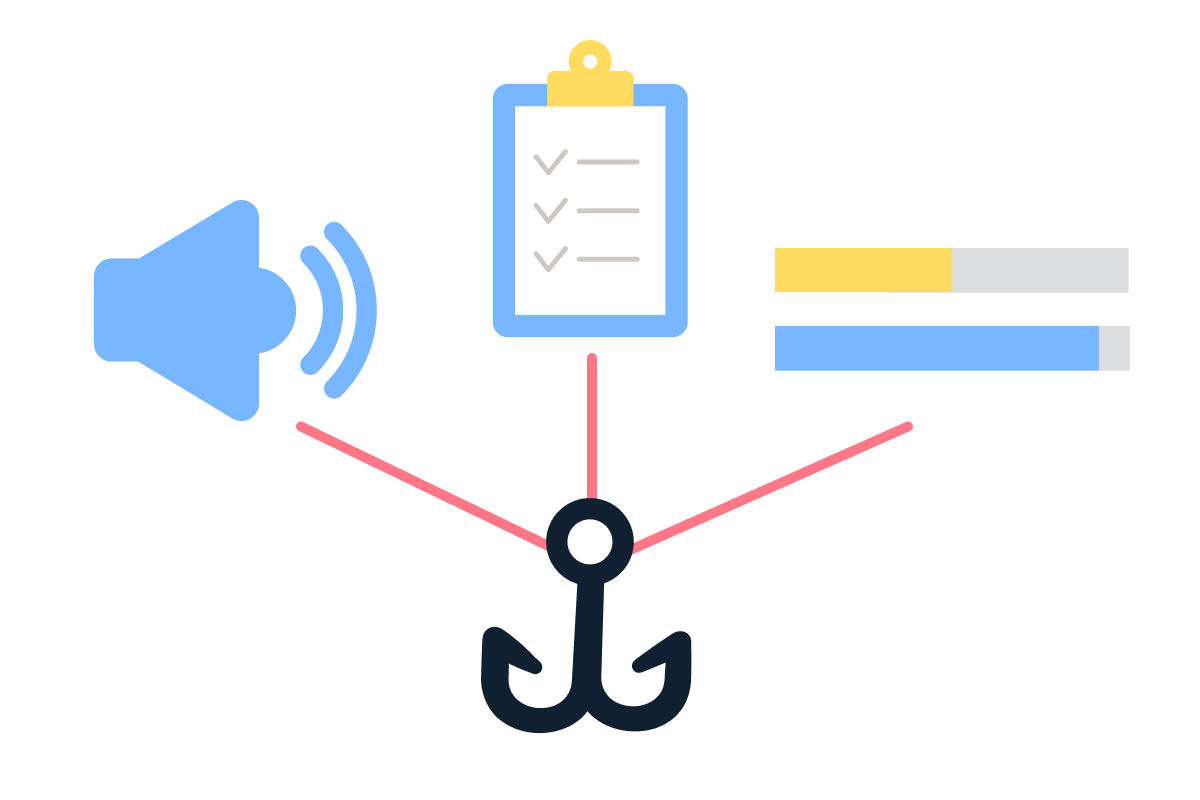
A single example can lock in:
- Format: bullet list, numbered steps, flowing prose, table
- Length: one line, one paragraph, 200 words
- Tone: formal, casual, dry, warm
- Structure: how ideas are ordered and connected
The same principle works across tasks. A project manager who includes one example of a meeting summary gets every subsequent summary in the same structure. A job seeker who shows the AI one version of a cover letter they liked gets follow-up drafts that match it. A teacher who includes a sample quiz question gets the rest of the set in the same format and difficulty level.
Select all that apply
Which of these situations would most benefit from few-shot prompting?
How Many Examples Do You Need?
One example is usually enough to establish format and tone. But few-shot prompting is called "few-shot" for a reason — you can use as many examples as the task requires. Two, five, 10: the number of examples is the number of "shots."

More shots help when the pattern is complex or when consistency really matters. If you're generating ten product descriptions that all need to follow the same structure, one example might drift by the fifth one. Two or three examples give the AI a stronger signal to hold the pattern across all of them. Start with one and add more only if the output isn't landing.
The one thing examples won't fix is a task that requires multi-step reasoning — like solving a logic problem or working through a calculation. For those, a different technique works better, and you'll encounter it in a later lesson.
For now, the question is simpler: zero-shot or few-shot — and it usually comes down to one thing: whether the output format and style are yours to define.
The same logic applies when the structure is more specific.
Examples don't add more work to your prompt — they replace the back-and-forth of correcting outputs that missed the mark. One upfront example often saves two or three rounds of revision.
A quick way to decide: if you'd recognize a wrong answer immediately because it doesn't match your expected format or style, use an example. If any reasonable response would work, go zero-shot.
- Zero-shot prompting is what you've been doing: A clear instruction, no examples — and it works well for most standard tasks.
- Few-shot prompting gives the AI a target: One or more examples anchor format, tone, length, and structure in ways description alone can't.
- The number of shots is the number of examples: Start with one, add more only if the output needs more precision.
- Match the approach to the task: If any reasonable response works, go zero-shot. If you'd recognize a wrong answer immediately, show an example.
What's Next?
You can now shape what the AI produces! In the next lesson, you'll learn how to guide how it thinks using techniques that improve reasoning quality.