Land Jobs With AI · Job Search With AI
Your Job Search Strategy
Map your skills and target direction
Build Your Job Search Foundation
Most people start a job search the same way: update an old CV and start scrolling job boards. A few applications later, things already feel chaotic and unfocused. But there's a better way to begin.
Throughout this guide, you'll build a complete, AI-supported job search system: from identifying your strengths and choosing target roles to applying effectively, preparing for interviews, and negotiating offers.

The Job Search Workflow
Before you touch a single application, you need to answer these questions:
- What can I do?
- Where do those skills fit?
- What direction am I targeting?
That's the workflow you'll follow in this lesson — extract your skills, research the market, identify your direction, and write a positioning statement that ties it all together.

Every piece of your job search — your CV, cover letter, LinkedIn profile, outreach messages — should tell the same consistent story. That story starts here.
Meet Dip Singh and Gabi
You'll practice alongside two professionals throughout this course.
- Dip Singh has spent 8 years in digital marketing — SEO, paid acquisition, and team management at B2B companies. He's looking for his next role in the same field.
- Gabi is a mechanical engineer with 6 years of experience who's ready to transition into project management.
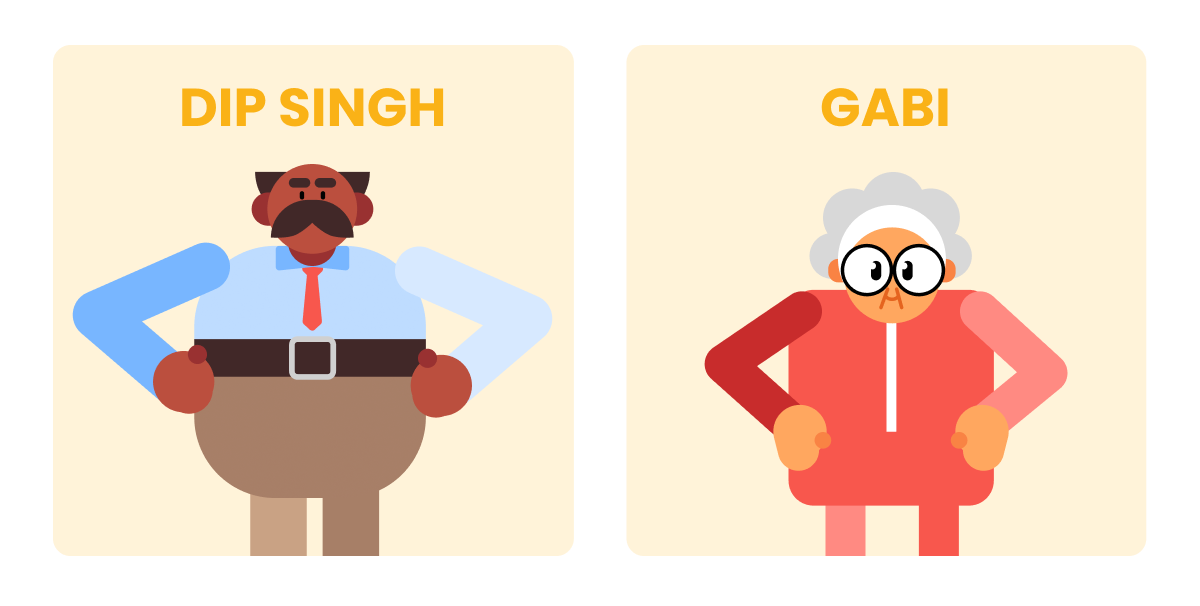
Two different starting points, one shared goal: a focused, AI-supported job search. You'll see how the same techniques work for both.
Whether you're staying in your field like Dip Singh or making a career shift like Gabi, the first step is the same: get clear on what you bring to the table. Not what your job title says, but what you've done, built, solved, and learned. That's where a skills inventory comes in.
What Is a Skills Inventory?
A skills inventory is a structured overview of your skills and tangible results: hard skills, soft skills, transferable strengths, and measurable achievements. This is the raw material behind your entire job search — the foundation for your CV, your positioning, and every application you'll write.

Select all that apply
What should a strong skills inventory include?
Most people undercount their skills. They forget what they picked up across projects, side responsibilities, and cross-functional work. AI can help surface patterns you might overlook — but only if you give it enough real context to work with. A vague input gets a vague inventory.
Extract Your Skills with AI
Claude is a strong choice for skills extraction. It handles long, unstructured input well and identifies patterns across roles, projects, and non-traditional experience, which makes it useful when your career path isn't a straight line.
Let's practice with Dip Singh, a marketing professional with 8 years of experience who's searching for his next role in the same field.

practice preview
Interactive practice
Fill in the blank
Help Dip Singh start building his skills inventory with Claude.
Choose one
Dip Singh got a skills list. What's the biggest problem with this output?
practice preview
Interactive practice
Fill in the blank
Now give Claude specific context about Dip Singh's experience.
Specificity Changes Everything
See the difference? When Dip Singh shared his actual role, scope, and responsibilities, Claude returned specific, evidence-based skills instead of a generic checklist.
- Career changers: If you're shifting fields like Gabi, your inventory surfaces transferable skills you may not think to name.
- Freelancers and contractors: If you've built your career through projects rather than traditional roles, an inventory helps you translate scattered experience into a coherent professional story.
- Returning professionals: If you've taken time away — for caregiving, a break, or personal reasons — your inventory helps you reconnect with what you built before and reframe it for today's market.
Research the Market With AI
The next step is understanding where your skills fit. Market research helps you identify realistic roles, see what employers actually require, and catch skill gaps before they cost you interviews.

Perplexity is a strong tool for this step. Unlike general chatbots, it draws on current web sources and provides citations, so you can trace where salary data, role requirements, or industry trends come from.
Let's conduct market research for Gabi, a mechanical engineer with 6 years' experience who is exploring a transition into project management.
practice preview
Interactive practice
Fill in the blank
Use Perplexity to help Gabi research roles that match her background.
Excellent!
Perplexity gave Gabi a starting point — project management paths that connect to her background, realistic salary ranges, and the gaps she'll need to close.
- Treat these figures as a starting benchmark, not a final answer. AI pulls from available web sources, which may not reflect your specific city, industry niche, or company size.
- Cross-check on dedicated platforms like Glassdoor, LinkedIn Salary, or Levels.fyi — especially before entering any salary conversation. The more sources you compare, the more accurate your range will be.
Write Your Positioning Statement
A positioning statement is a short paragraph that connects who you are professionally, what you're strongest at, and where you're headed. It's a reference point you'll use to keep your CV, cover letter, LinkedIn, and outreach consistent throughout the job search.
Before you write any application material, your positioning statement answers one question, "What's my professional story, and how does it lead to the role I want?" Let's help Dip Singh draft his.

practice preview
Interactive practice
Fill in the blank
Help Dip Singh draft a positioning statement with Claude.
Perfect!
Dip Singh's positioning statement is specific, grounded in real experience, and directly points to his target role. He can now use it as a reference every time he writes a CV summary, a LinkedIn headline, or a cover letter opening — and stay consistent across all of them.
practice preview
Interactive practice
True / False
Evaluate this positioning statement.
- Positioning before applications: A strong job search starts with understanding your skills, your market, and your direction — not with updating your CV.
- Specificity drives AI quality: The more concrete details you provide (real experience, actual numbers, specific goals), the more useful and actionable the output becomes.
- Right tool for the right task: Claude excels at extracting patterns from unstructured experience, Perplexity delivers sourced market data you can verify, and ChatGPT is effective for comparing options and building structured plans.
What's Next
Dip Singh and Gabi are professionals just like you — experienced, motivated, and ready to make their next move. Throughout this course, you'll work through every stage of the job search alongside them, using the same AI-powered techniques to get real results.
In the next lesson, you'll focus on building your CV. Let's keep going!