Land Jobs With AI · Job Search With AI
Effective Applications
Turn your applications into a system
From Applications to Results
You can have the strongest CV, cover letter, and LinkedIn profile in the world — but if you're applying to the wrong places, through the wrong channels, with no system to track what's working, you're leaving results on the table. This lesson turns your job search into a repeatable, trackable process.
Applying Is a System
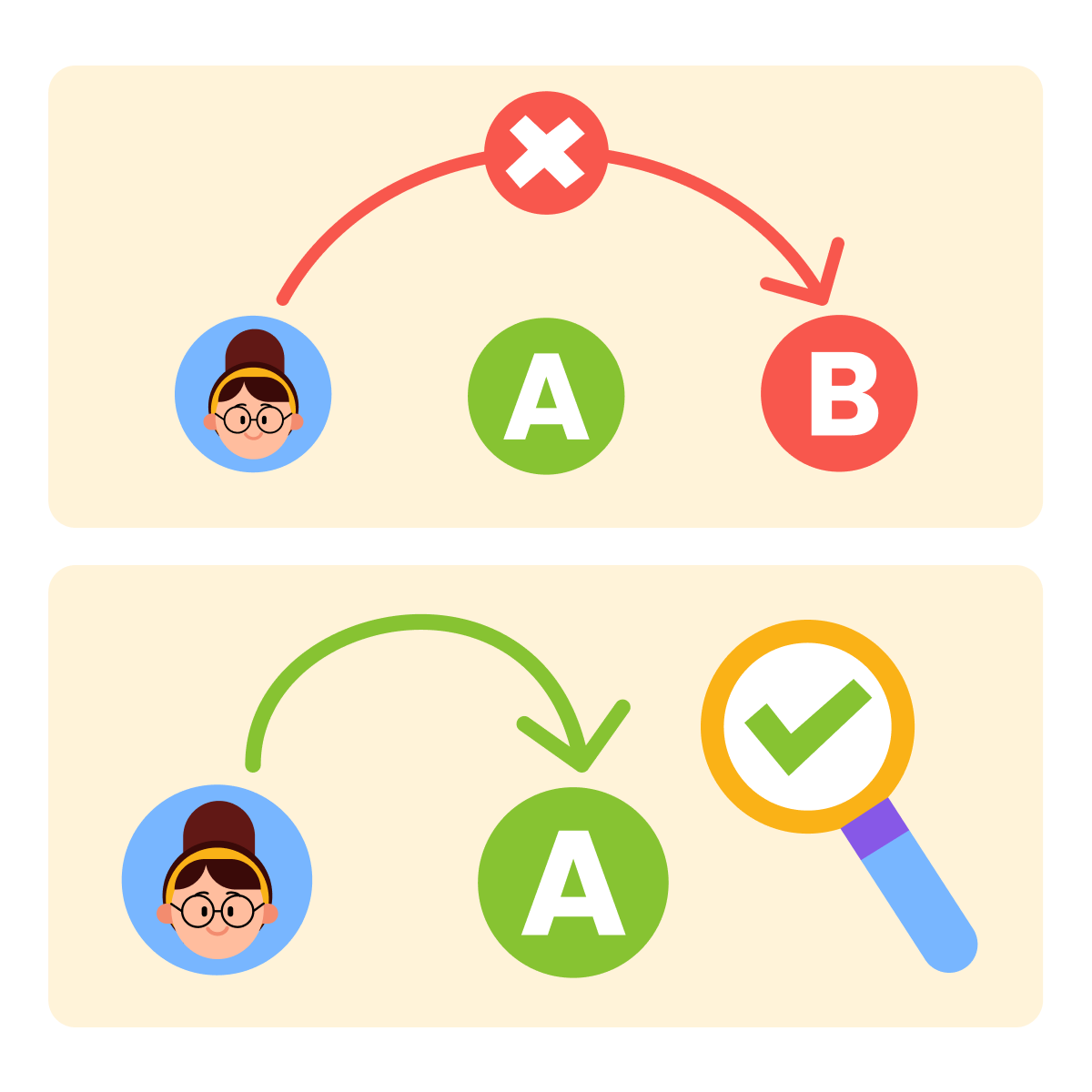
Most job seekers treat applications like a numbers game — send as many as possible and hope something sticks. That approach burns time and energy fast. An effective job search works more like a funnel: you identify the right channels, tailor each application to the role, track everything, and adjust based on what gets results.

Know Your Application Channels
There are four main channels for job applications, and each works differently:
- Job boards (LinkedIn Jobs, Indeed, Glassdoor) give you volume and filters.
- Company career pages often have roles not posted elsewhere.
- Recruiter outreach lets you skip the queue by going directly to hiring teams.
- Referrals through your network have the highest conversion rate.
Select all that apply
Which application strategies tend to produce the strongest results?
You don't need to use all four application channels equally. Your mix depends on your field, position, grade, and how active your network is. But relying on just one — especially job boards alone — limits your reach. A balanced strategy uses at least two or three channels consistently.
Tailor Applications With AI
You've already learned how to tailor your CV and write a personalized cover letter. Now it's about doing that efficiently across multiple applications without sacrificing quality. The goal isn't to spend an hour per application — it's to spend the right 15-20 minutes on each one.

ChatGPT handles quick tailoring well. Give it your master CV, the job description, and clear instructions, and it can suggest which bullet points to prioritize and which language to adjust. For deeper rewrites, use Claude — it's better at maintaining tone across a full document.
practice preview
Interactive practice
Fill in the blank
Help Dip Singh tailor his CV summary for a specific job posting.
The Tailoring Pattern
Dip Singh highlighted various aspects of his experience. "Product-led growth," "conversion funnels," and "mid-market audiences" now match the job posting's language. That's the tailoring pattern: same experience, different framing.

Speed Up Your Search Without Cutting Corners
Tailoring every application takes time. But there are three AI techniques that make the process significantly faster without sacrificing quality. They save time without cutting corners.
Score the Fit Before You Apply
Not every job posting is worth 20 minutes of tailoring. Before you invest time, paste the job description into ChatGPT or Claude, along with your master CV, and ask it to rate the fit between your experience and this role on a scale of 1-10. If the fit is below a 6 and the gaps are skills you don't have, move on. This one step can save hours per week.

Research Companies in Batches
Instead of researching each company one by one before every application, batch the work. Pick 5-7 target companies at the start of the week and use Perplexity to research all of them in one sitting — mission, recent news, strategic priorities, and team culture.
Save the results in a document. When it's time to tailor a cover letter or outreach message, you already have the material ready.
Build a Prompt Library
You'll reuse the same types of prompts dozens of times — tailoring a CV summary, writing a cover letter opening, drafting a recruiter message. Save your best-performing prompts as templates with placeholders for the company name, role, and key details. Now you're not reinventing the prompt every time — just swapping in new details.

Reach Recruiters Directly
Not every application should go through a job board. For roles you're serious about, sending a short message directly to the hiring manager or recruiter on LinkedIn can put your name in front of the right person before the ATS even sees your CV. This works especially well when paired with a strong profile.
practice preview
Interactive practice
Fill in the blank
Help Gabi write a direct message to a recruiter at a target company.
Follow-Up Over Cold Outreach
Gabi didn't cold-message a stranger — she followed up on an existing application with a brief, specific note. That's far more effective than a generic "I'm interested in opportunities at your company" message.

A Note on AI Ethics in Applications
AI is a powerful tool for tailoring and organizing your job search. But some practices cross the line. Mass-applying with automation tools that submit hundreds of identical applications, using AI to fabricate experience, or generating entire cover letters without any personal input — these approaches are increasingly flagged by employers.
Some companies now include AI-use policies in their application process. Being transparent and using AI as an assistant — not a replacement for your own thinking — keeps your applications honest and your reputation intact. The rule is straightforward: AI sharpens your real experience, it doesn't create it.
Build an Application Tracker
Once you're applying across multiple channels, things get messy fast. Which roles did you apply to? When? Did you follow up? What's the status? Without a system, you'll lose track within the first week. A simple Google Sheets tracker solves this — and AI can help you set it up.
practice preview
Interactive practice
Fill in the blank
Help Dip Singh create an application tracker with ChatGPT.
Tracker Ready
Dip Singh now has a living document that tracks every application, reminds him when to follow up, and shows which channels are producing results.
Follow Up Strategically
A short, polite follow-up 7-10 days after applying can move your application to the top of the pile. It signals genuine interest and reminds the hiring team that you exist. Keep it brief — 2-3 sentences referencing the role and one reason you're a strong fit.
practice preview
Interactive practice
Fill in the blank
Help Gabi write a follow-up email after applying.
The Follow-Up Formula
Short, specific, and not pushy. Gabi referenced the exact role, named her key strength, and made a clear ask — all in under 60 words. That's the follow-up formula: remind, connect, ask.
- A job search is a system: Defined channels, tailored materials, and consistent follow-up keep the process focused and sustainable.
- Quality over volume: A few well-tailored applications with direct outreach outperform dozens of untargeted submissions.
- Track everything: A simple Google Sheets tracker reveals which channels and approaches work best, so you can adjust your strategy with real data.
- AI assists, it doesn't replace: Use AI to tailor, organize, and analyze — but keep your applications honest, specific, and grounded in real experience.
What's Next
Your applications are going out, your tracker is running. In the next lesson, you'll prepare for what comes next — the interview. You'll learn how to research companies and walk into every interview with confidence. Let's keep going!