Omni · Advanced Omni Tricks
Real World Use & Safety
Ethical guidelines for AI video creation
Using Omni Responsibly
You now have all the tools needed to create professional AI-generated videos. But like any powerful creative technology, AI video comes with responsibilities.
Before finishing this course, it's important to cover a few ethical and practical principles. These aren't complex rules — just clear guidelines that help you use Omni confidently and responsibly.

Why This Matters
AI video technology is still a new territory. So, a few simple practices will help you use it responsibly, protect yourself legally, and build trust with your audience.
Think of these as smart habits, not restrictions.
We'll cover three key areas:
- Transparency about AI-generated content
- Respect for people's privacy and likeness
- Avoiding misleading or deceptive content
Transparency: Letting People Know
The most important practice is simple: let your audience know when content is AI-generated.
This doesn't mean adding disclaimers to everything. It means being clear when it matters.
Choose one
When do you think you should disclose that a video is AI-generated?
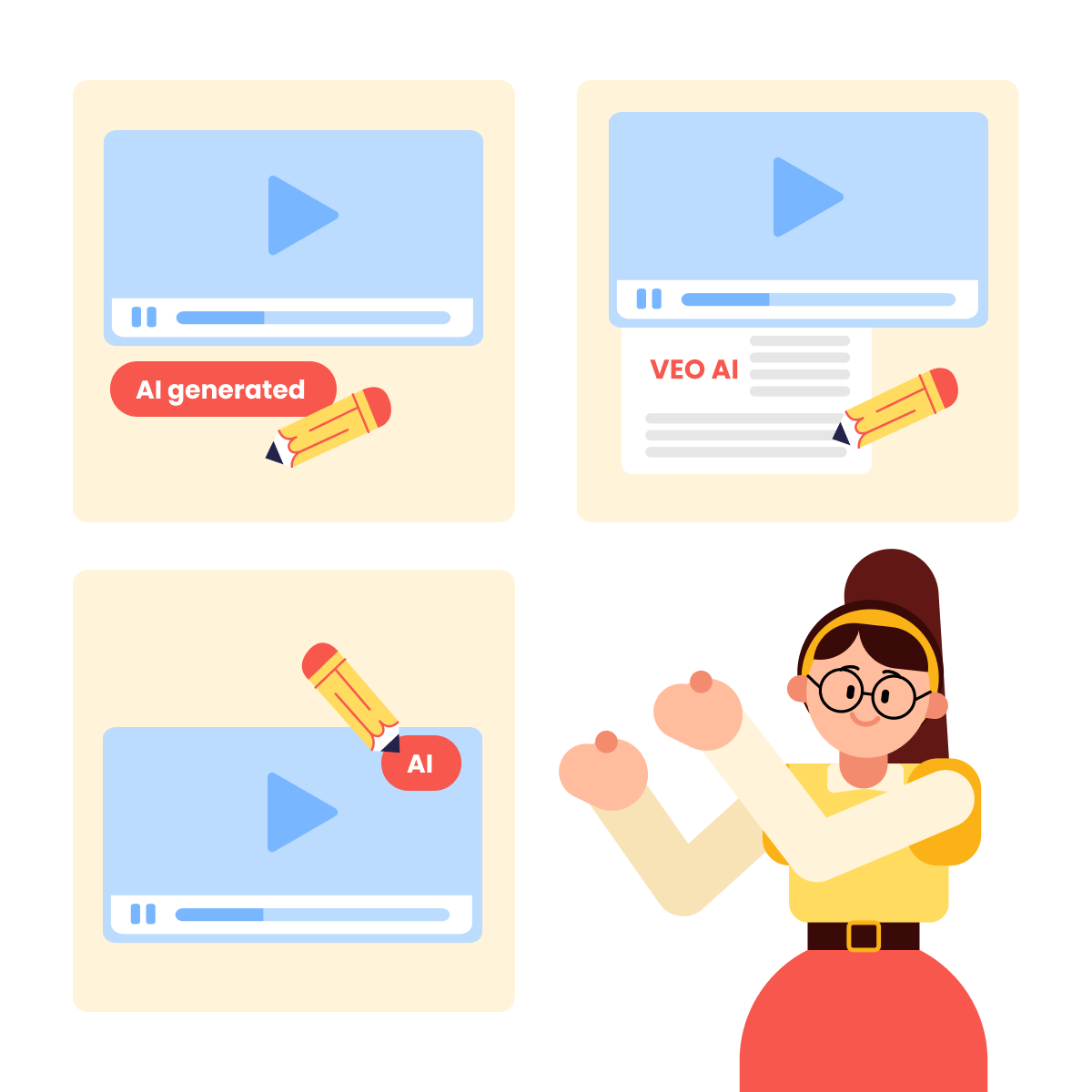
Disclosure can be simple and natural:
- Captions: "Created with AI" or "AI-generated video"
- Descriptions: "This video was created with Omni"
- In-video text: A small note in the corner or end credits
The goal is to be transparent about your process, not to diminish your work.
Built-In Transparency
Omni actually handles part of the disclosure automatically. Every video it generates is invisibly marked with SynthID — a digital watermark developed by Google DeepMind that's embedded directly into the footage.
You can't see or hear it, but it permanently identifies the video as AI-generated, even if someone edits, compresses, or reposts it.
Respecting Privacy and Consent
When you use reference images of real people, basic courtesy applies: make sure you have permission.
This is especially important when creating content featuring someone's likeness.
Select all that apply
In which scenarios do you think you should get permission before using someone's image?
Some simple guidelines:
- Your own photos — safe to use
- Family/friends for private projects — generally fine, but ask if unsure
- Public or commercial use — always get permission
- Strangers or public figures — avoid or seek legal advice
When in doubt, ask. It’s the simplest and safest option.
Avoiding Misleading Content
AI video can create incredibly realistic content. This power comes with responsibility: never create content that deceives or misleads.
This means avoiding content that could be used for fraud, misinformation, or impersonation.
Choose one
Which of these two scenarios do you think is ethical?
Avoid creating content that involves:
- Fake news or misinformation
- Deceptive impersonation of real people
- Fraudulent product endorsements
- Manipulative or misleading narratives
Creative, clearly fictional content is fine, deception is not.
Copyright and Intellectual Property
Omni generates original content, but you should still be mindful of copyright when referencing existing brands, characters, or media.
The basic principle: don't recreate protected content without permission.
Choose one
Which scenario best respects copyright?
So, for public or commercial content:
- Create original characters and visuals
- Avoid recreating specific copyrighted characters or brands
- Seek legal advice when referencing protected material
- Be cautions even with personal, non-commercial parody
When unsure, originality is always the safer — and more valuable — choice.
Building Trust With Your Audience
These guidelines are ways to protect yourself and build credibility.
Being transparent, respectful, and honest makes your content more trustworthy and strengthens your credibility as a creator.

Responsible AI use benefits you directly:
- Builds audience trust: People appreciate honesty.
- Protects you legally: Following guidelines prevents issues.
- Enhances your reputation: Responsible creators stand out.
- Future-proofs your work: Good practices scale with your growth.
Think of ethics as a competitive advantage, not a burden.

Now that you're familiar with the key ethical considerations, let's wrap up with a quick checklist you can return to anytime you're creating AI-generated content.
When sharing AI-generated videos, always ask yourself:
- Have I disclosed that this is AI-generated when posting publicly?
- Do I have permission to use any real people's images in this content?
- Is this content honest and not intended to deceive or mislead?
- Am I avoiding recreating copyrighted characters or brands?
- Would I feel comfortable explaining to my audience how this was made?
You're Ready!
Congratulations, you've now completed the Omni course!
From this moment, you have all the skills to create professional, intentional AI videos: from single clips to multi-scene stories.
And what is equally important — you know how to use this tool responsibly and ethically.
The creative possibilities are wide open: social content, storytelling, tutorials, marketing materials, personal projects — anything you can imagine.
With the skill set learned in this course, you can create something amazing and do so with confidence, knowing you're using AI the right way.
Good luck!