AI-Powered Creative Income · Monetize the Work
Finding and Communicating with Clients
Turn projects into lasting relationships
Communicating With Clients
You have the skills, the tools, and the infrastructure. Now, let’s find your clients and learn how to write a brief to earn more with your skills.
In this final lesson, you'll build the communication system that turns inquiries into projects and projects into long-term clients. Let's finish strong!

Communication Is Your Highest-ROI Skill
Client communication is the revenue layer of your creative business.
A clear, fast, professional response can close a $500 project. A slow, uncertain one loses it to someone with half your skill but twice your confidence.
Choose one
A small coffee brand DMs you, "Hey, we need some product images for our new blend. Can you help?" Compare these two replies. Which works better?
The Discovery Message
The discovery message is your first real reply to a potential client. Its job isn't to sell, it's to gather enough information to write an accurate proposal.
Every discovery message should do three things:
- Confirm you can help
- Ask 2-4 scoping questions
- Promise a specific next step with a timeline
practice preview
Interactive practice
Fill in the blank
A boutique candle brand reaches out asking for social media visuals. Use Claude to draft your reply.
Select all that apply
The candle brand replies, "We need about 12 posts a month, mostly Instagram, and we have a brand kit. Can you start this week?" Which of these should you confirm first?
From Discovery to Proposal
Once the client replies with details, you have everything you need to scope the project. Scoping means defining exactly what you'll deliver, by when, and for how much. Every hour you spend creating before the scope is agreed is an hour you might not get paid for.
Why Brief Matters
Every profitable creative asset starts the same way: with clarity about who it's for and what it does. That's what a creative brief gives you.

What Is a Creative Brief?
A creative brief is a short document that answers the questions a buyer would ask before paying: what it is, who it's for, and why it looks the way it does. In AI work, the brief is what produces an intentional, sellable output.
Let's write a brief for social media images to send to a local candle brand.
practice preview
Interactive practice
Fill in the blank
Before writing the brief, use ChatGPT to quickly understand the audience.
From Research to Brief
Now you have two inputs — the client's own details and the market context from your research. The brief combines both: client preferences set the constraints, market research sharpens the creative direction. This is the process you'll follow for every client project, regardless of format.
practice preview
Interactive practice
Fill in the blank
Ask Claude to write a creative brief for the candle brand project using what you know so far.
Choose one
Claude produced a brief, but it has sufficient gaps. What's the most critical problem?
practice preview
Interactive practice
Fill in the blank
Refine the prompt with a specific audience, visual direction, and content themes drawn from both the client's input and your market research.
Great Work!
You just built your monetization-ready brief. Notice the difference: once you know who's buying and why, every creative decision becomes easier. Send this brief to the client for approval before you start creating — their sign-off means you're aligned on direction.

The Follow-Up That Builds Retainers
The brief is sent, the project is delivered, and payment is made. What's next? Reach out to your clients again.
The post-project follow-up is a high-leverage message in the client communication system. One message, sent 5-7 days after delivery, can turn a one-off project into a monthly retainer.
practice preview
Interactive practice
Fill in the blank
The candle brand's first month is complete. Write a follow-up that opens the door to ongoing work.
Where to Find Your First Clients
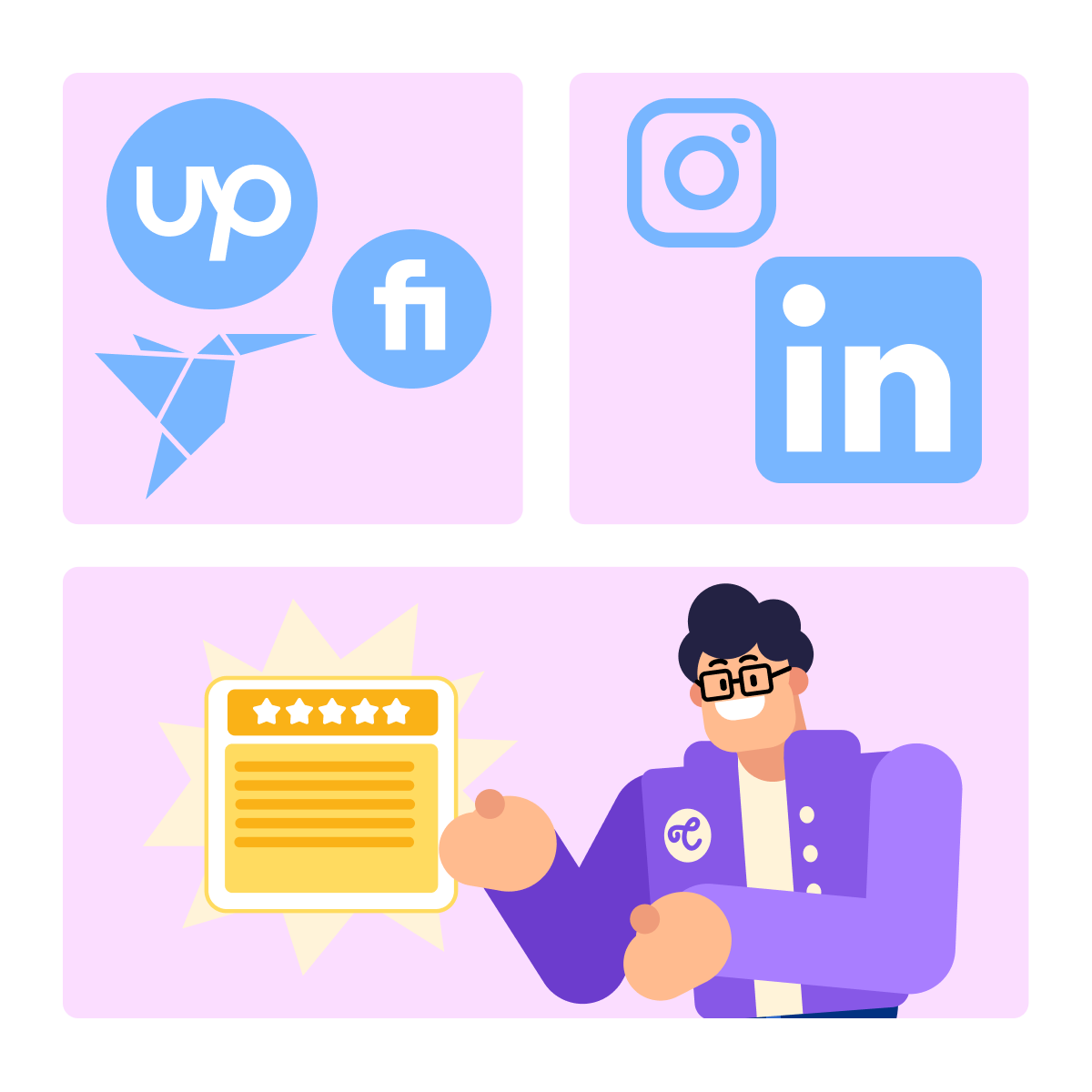
As an AI creator, your best early clients come from three channels:
- Freelance platforms like Fiverr and Upwork, where you list specific productized services.
- Direct outreach on Instagram or LinkedIn, where you message small brands whose content looks inconsistent and offer a free audit or sample.
- Referrals from your first two or three clients, which you actively ask for after a successful delivery.
Three Channels That Land First Clients
Freelance platforms (Fiverr, Upwork) work best when you list specific productized services — "12 branded Instagram posts per month for product brands" closes faster than "AI content creation."
Direct outreach on Instagram or LinkedIn means messaging small brands whose content looks inconsistent and leading with a specific observation about their feed, not a generic pitch.
Referrals from your first two to three clients are the highest-converting channel — but only if you explicitly ask. After every successful delivery, add one line to your follow-up: "If you know anyone who could use similar work, I'd love an introduction."
Your Communication Stack — All in One Place
Every template and script from this lesson belongs in the Client Templates page in your Notion workspace from Lesson 7. Store your messages and proposals in the Notion database.
The Math Behind a Sustainable Creative Business
Three retainer clients at $450/month is $1350 in recurring monthly revenue. Add two one-off projects per month at $300 average, and you're at $1950. That's achievable within 60-90 days of actively offering services with the system you've built.
- Your first reply closes or kills the deal: Confirm you can help, ask 2-4 scoping questions, and promise a next step within 24 hours.
- Discovery messages protect your pricing: Never quote before you know the formats, revision rounds, and whether it's a one-off or retainer.
- Client briefs prevent revision cycles: Combine what the client tells you with what the market data shows, and get approval before you start creating.
- Templates and briefs go in your Notion workspace: Save every message and brief you write so the next client project starts in minutes, not hours.
You've Built the Full System
This is the final lesson, and you now have everything! The creative skills to produce assets, the project management infrastructure to run your business from a single workspace, the pricing framework to charge what your work is worth, and the communication system to find clients.
Now you're ready to use it! Go and create something impressive!