AI Social Influence & Blogging · Growth and Sustainable Influence
Monetization
Turn audience trust into sustainable income
Monetization — Turning Influence Into Income
Aria has an audience, a content system, and a growing community. But how does this become income?
In this lesson, you'll learn how platform monetization programs work, how affiliate marketing turns recommendations into revenue, and how to build a sustainable income strategy that protects your reputation while growing your earnings.
Let's make Aria's influence pay!

Select all that apply
What do you think determines how much a creator can earn?
The Monetization Mindset
Monetization is a system you build alongside everything else. Creators who earn sustainably are the ones who think about revenue paths early, even while their audience is small.
For AI avatar brands, there's an additional advantage. Aria can produce content at a pace and consistency that's hard to match in on-camera production. That means she can meet platform monetization thresholds faster, produce affiliate content more frequently, and deliver sponsored work on tighter timelines — all without burnout.

Three Revenue Streams for Creators
Most creator income comes from a combination of three sources:
- Brand partnerships
- Platform monetization programs
- Affiliate marketing
You already learned to pitch and script brand partnerships — let's move on to the other two sources and how to price all three.
Platform Monetization Programs
Every major platform has a built-in monetization program with its own requirements that pays creators directly.
These programs provide relatively passive income — you create content, the platform pays you based on performance — but the payouts may vary.

YouTube Partner Program
YouTube (AdSense) is the most stable creator monetization program. Once accepted into the YouTube Partner Program, you earn revenue from ads placed on your videos. Payouts are predictable and scale with views.
Requirements: 1,000 subscribers and 4,000 watch hours in the past 12 months (or 10 million YouTube Shorts views in 90 days).
TikTok Creativity Program
TikTok's Creativity Program pays creators based on video performance — but rates fluctuate, and the program's availability varies by region.
Requirements: 10,000 followers, 100,000 views in the last 30 days, and videos must be over 1 minute. TikTok monetization is less predictable than YouTube but can reward viral moments.
What About Instagram?
Instagram doesn't offer a single, widely available ad-revenue program like YouTube. Instead, most options are feature-based and often invite-only or limited to eligible accounts.
These options include:
- Bonuses (limited-time, invitation-only performance payouts for Reels and some posts)
- Subscriptions (followers pay a monthly fee for exclusive content; eligibility varies)
- Gifts (viewer support on Reels via virtual gifts)
- Ad monetization tests (for example, ads in profile feed or Reels — typically limited to a select group)
All these programs can benefit you and help you earn. For example:
- Mori Calliope runs an avatar-led channel on YouTube. Playboard estimates she's earned about $2.07M in lifetime revenue from highlight messages during streams — a clear example of how a virtual creator can monetize through community support.
- Creator couple Kay and Tay Dudley, according to Business Insider, earned around $24,000 in June and nearly $87,000 in July from the TikTok Creativity Program
- Fortune reported creator Schannon Yodice earned as much as $24,000 in a month from Reels Play bonuses
Beyond Platform Payouts
Platform monetization is worth pursuing. But it might not be enough on its own, especially early on. The revenue stream that scales fastest for niche creators — even with a smaller audience — is affiliate marketing.
What's Affiliate Marketing?
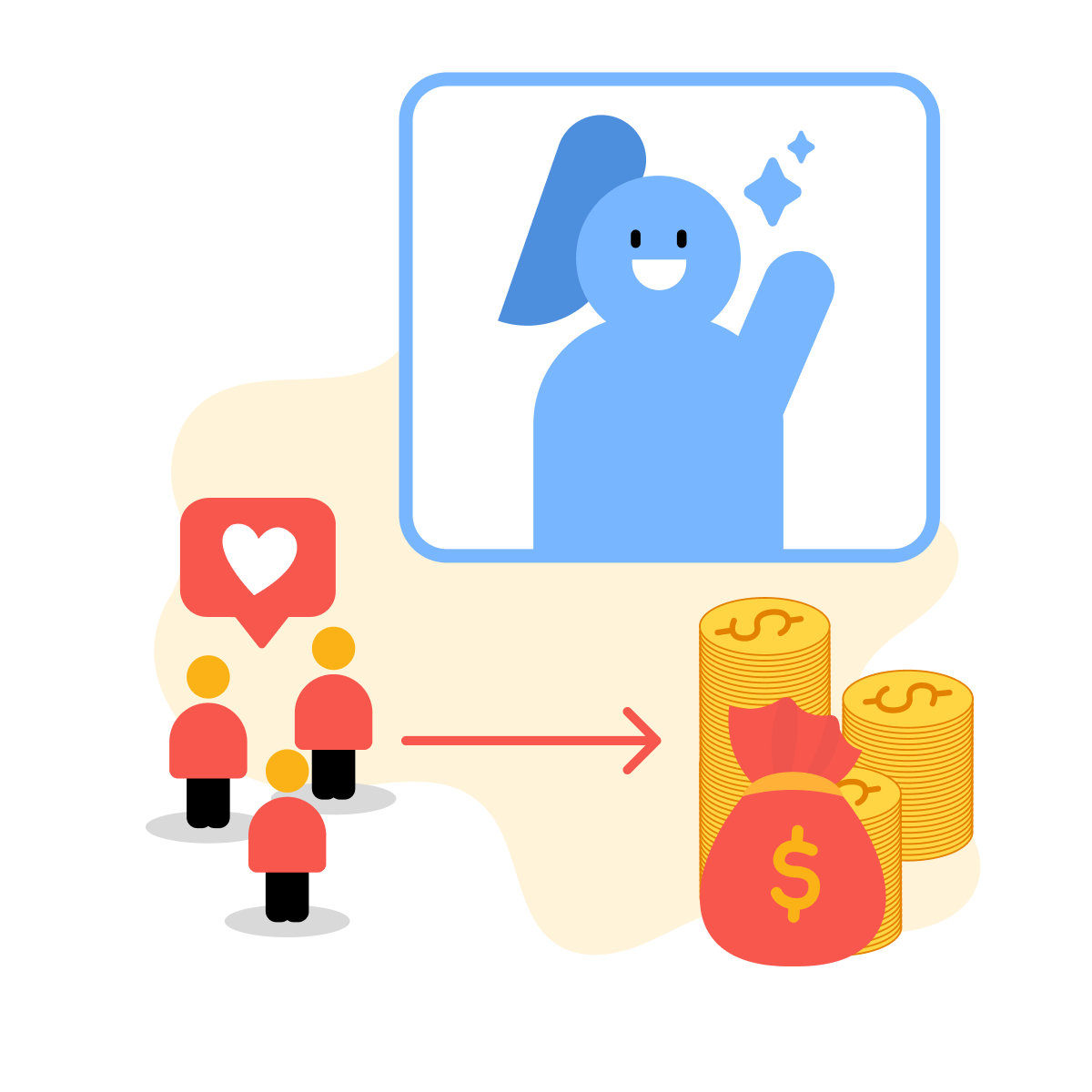
Affiliate marketing is earning a commission when someone buys a product through your unique referral link.
You recommend a product, your audience clicks your link, they purchase, and you earn a percentage — typically 5-30% depending on the product category and program.
For a niche creator like Aria, affiliate marketing can be more profitable than platform monetization because the earnings are tied to your audience's trust, not raw view counts.
The most common affiliate program types for creators are:
- Amazon Associates: offers a broad product range, lower commissions (1-10%), high conversion because people already trust Amazon checkout.
- Brand-specific programs: many companies run their own affiliate programs with higher commissions (10-30%).
- Affiliate networks (ShareASale, Impact, CJ Affiliate): marketplaces that connect creators with hundreds of brands across industries. You browse and apply to individual programs within the network.
practice preview
Interactive practice
Fill in the blank
Use Claude to identify affiliate opportunities that align naturally with Aria's content pillars and audience.
Great Work!
Every suggestion connects to the content Aria already creates. That's the principle. Affiliate products should feel like natural extensions of your best-performing content, not random recommendations.
If your audience is already saving the "one priority" video, a guided journal is the obvious next step.
Choose one
A supplement brand offers Aria a 35% affiliate commission — the highest she's been offered. But you haven't tried the product and can't verify the health claims. What should you do?
Integrating Affiliate Content Naturally
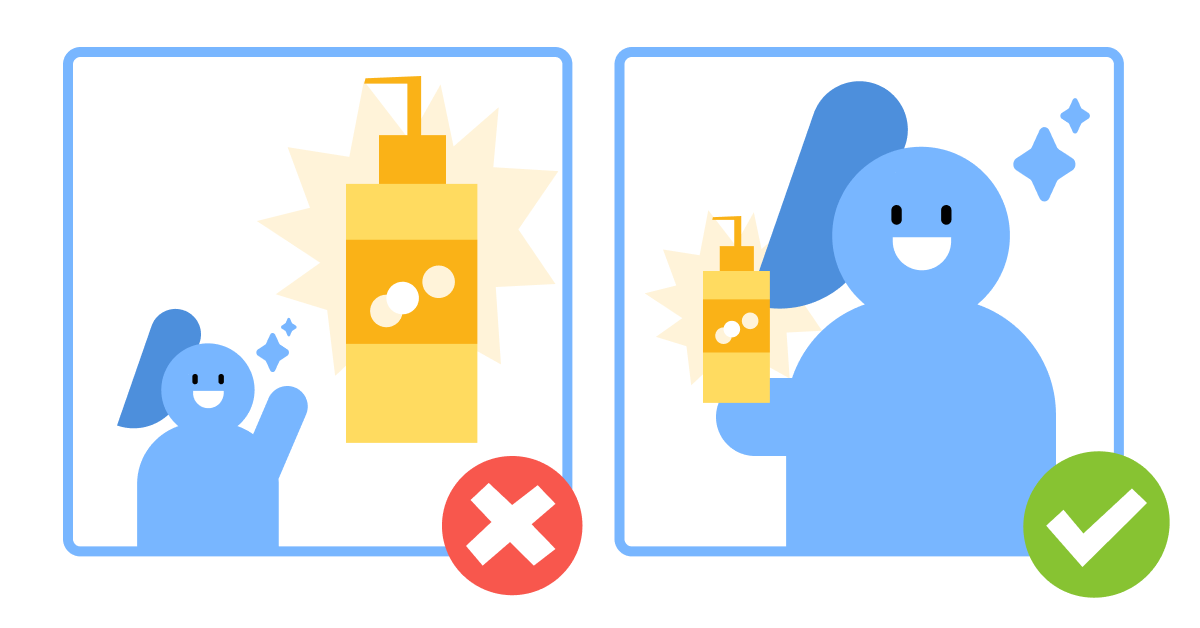
The best affiliate content doesn't feel like a sales pitch. It follows the same principle as sponsored content: the content should be valuable even if you remove the product link. The product appears as a natural part of Aria's routine, tip, or recommendation — not as the point of the video.
Ethical Affiliate Marketing
Affiliate income depends on trust. One dishonest recommendation can damage the credibility you've spent months building. Three rules that protect your brand:
- Only recommend products you've genuinely vetted.
- Always disclose affiliate links.
- Never let commission rates drive your recommendations.
practice preview
Interactive practice
Fill in the blank
Use Claude to write a video script that naturally integrates an affiliate product into Aria's existing content format.
Perfect!
Notice the last line: "a sticky note works too." That single sentence does more for trust than any sales pitch could. It tells the audience Aria cares about the habit, not the sale — which makes the product recommendation feel honest rather than motivated by commission.
Pricing Your Work
When brands approach you for partnerships — or when you pitch to them — you need a rate. While undercharging devalues your work, overcharging prices you out of opportunities at your current stage.

The right rate reflects four things: your engagement rate, your audience quality, your content quality, and the deliverables you're providing.
A common starting point for creators under 50,000 followers is to anchor your price to real performance — especially average engagements per post — and then adjust based on scope.
One simple way to estimate a baseline is:
Base rate ≈ (Average engagement per post × a per-engagement range)
To get average engagements per post, take your last 10 comparable posts and calculate (likes + comments + saves + shares) for each, then average them.
A per-engagement rate is simply the value you assign to one engagement. Most creators start around $0.05–$0.30 per engagement, then adjust upward for Reels, usage rights, exclusivity, or rush delivery.
For AI avatar brands, you can also factor in production speed — Aria can deliver polished video content faster than most human creators, which is genuinely valuable to brands on tight timelines.
practice preview
Interactive practice
Fill in the blank
Use Claude to help you calculate a baseline rate for brand partnerships based on real engagement data.
Excellent!
This isn't a fixed formula — it's a starting framework. As Aria's engagement grows and her track record of brand partnerships builds, rates increase. The key is having a number grounded in real data, not guesswork. Claude can recalculate this quarterly as your metrics evolve.

Building a Sustainable Revenue Mix
The most resilient creator businesses don't rely on a single income source. Platform monetization fluctuates, brand deals are inconsistent, and affiliate income takes time to build. But if you combine them, they create stability.
Trust first. Value first. Revenue follows.
Only recommend products you've vetted. Only partner with brands that match your pillars. Only charge rates you can justify with data.
For AI avatar brands, add one more rule: always be transparent about what Aria is and who's behind her. Honesty is also your most profitable long-term strategy.
You've Built the Whole System
Take a moment to see what you've created across this course! You have:
- Built Aria from scratch — a positioned brand with a clear niche, a defined audience, and a visual identity generated with AI
- Developed a content strategy with hooks, pillars, and a calendar
- Optimized Aria's profiles, measured what matters, built toward an audience you own
And now, you have a monetization strategy to make it all sustainable.

Now your influence is not a side project — you can scale it into a creator business.
Aria started as a prompt — and she's now a brand with a voice, a community, and a revenue path. Everything you built for her, you can now apply to any niche, any avatar, or any brand — because the system works regardless of the character.

Now you have the tools and the system, and you know exactly how to use them. Let's go build something extraordinary!