AI Copywriting · Copywriting Across Formats
Product Pages
Product pages that drive sales
Selling Product Pages
Imagine this: a buyer lands on a product page, skims the specs, and clicks away. The product is great, but the copy lacked a decent reason to buy.
In this lesson, you'll learn what makes product pages different, how to write descriptions that convert, and structure feature-to-benefit copy for buyer types.
Select all that apply
A visitor lands on your product page. What's most likely true about them compared to a landing page visitor?
Product Page vs. Landing Page
Both product pages and landing pages are designed to convert — but they serve readers at different stages. A landing page introduces an offer and persuades someone to take a single action. It often builds the case from scratch: what this is, why it matters, and why now.
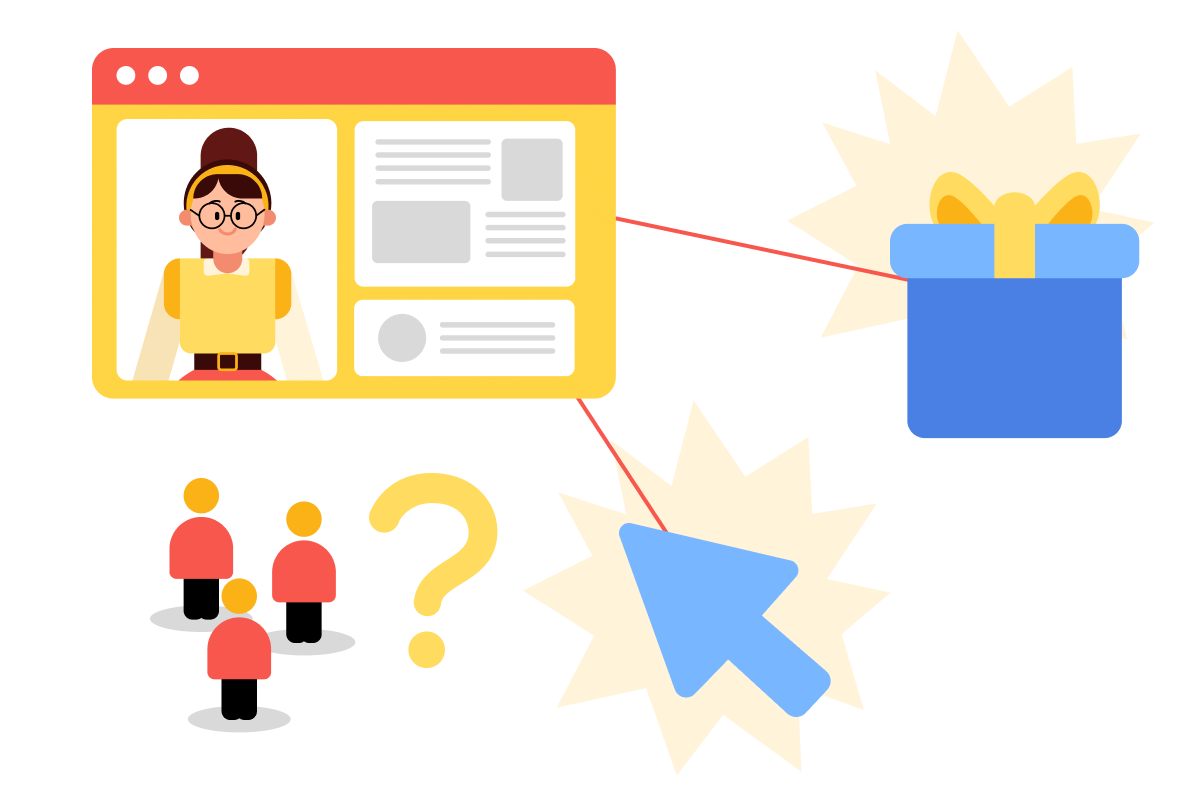
A product page assumes the reader already has context. They've browsed the site, clicked from a category page, or searched for this specific product. They want details — specifications, comparisons, proof, and enough information to feel confident buying. The structure shifts from persuasion-first to information-plus-persuasion.
The Message Triangle on Product Pages
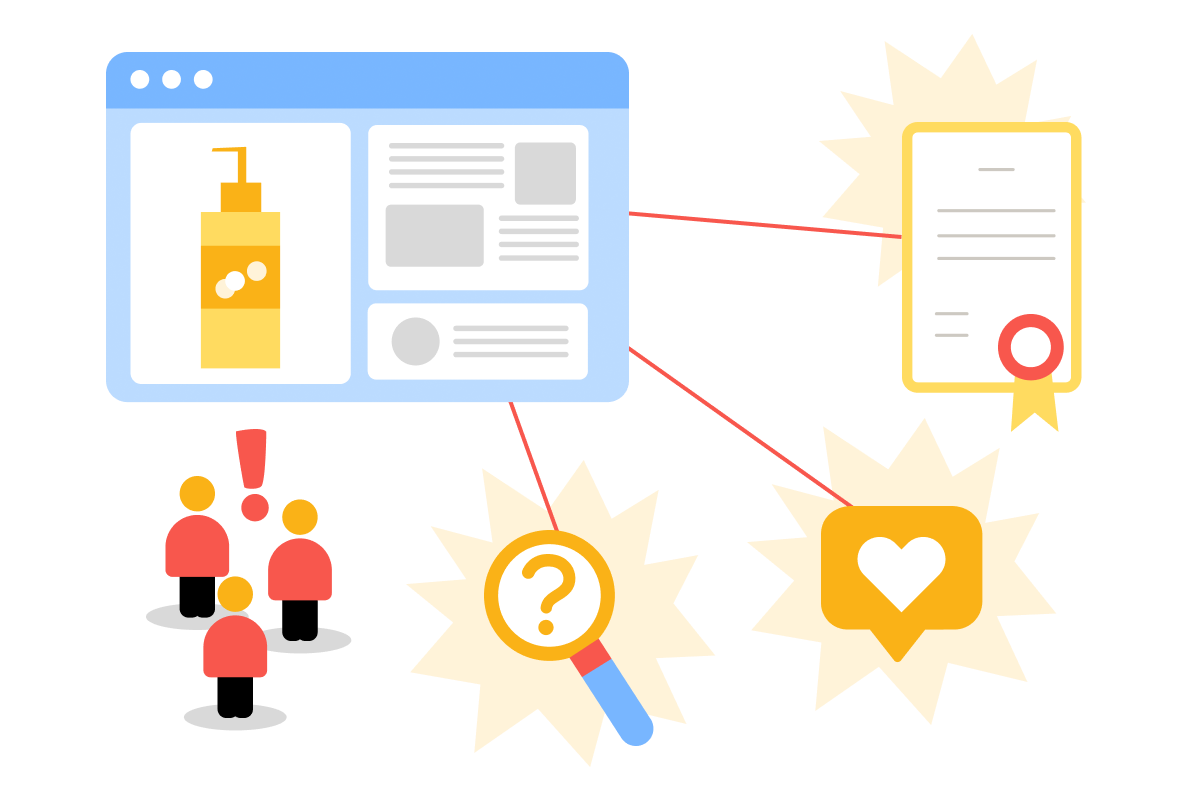
Remember the message triangle? Offer + Outcome + Proof.
This is the engine of every product page. Without all three, the page has gaps that cost conversions.
Let's see how the triangle maps to a product page:
- Offer: What exactly is the product? Be specific: name, type, key differentiator.
- Outcome: What result does the buyer get? Not the feature list, but the change in their situation.
- Proof: Why believe the promise? Reviews, ratings, data, certifications, mentions.
Select all that apply
A product page says, "Our wireless earbuds feature 40mm drivers, Bluetooth 5.3, and a sleek matte finish." Which parts of the message triangle are missing?
Writing Product Descriptions
The product description is the core copy on the page. It needs to do the most work in the least space. A strong product description answers three questions in order: What is it? What does it do for me? Why should I trust it?
Choose one
Which version of this product copy is stronger for a product page?
practice preview
Interactive practice
Fill in the blank
Use Claude to write a product description that follows the message triangle — offer, outcome, proof.
Excellent!
- Outcome first: "wake up to fresh coffee without touching a button"
- Features second: learns schedule, grinds beans, brews into a travel mug
- Proof last: wired mention, star rating, user count
Three sentences, full message triangle. That's the structure to replicate.
How Long Should a Product Page Be?
The length of a product page depends on what you're selling. A simple product (a phone case, a candle) can convert with a short page.
A complex or high-priced product (enterprise software, a $2000 mattress) needs a longer page with more proof, detailed specs, comparison tables, and multiple objection handlers.
Feature-to-Benefit Translation
Once you've decided on the right page length, the next question is what goes on it — and one of the common mistakes is filling that space with features instead of benefits. Product pages succeed when they translate features into benefits.
The translation formula is simple: Feature → so you can → Benefit
- "10-hour battery" → so you can listen to the music all day without charging at your desk.
- "256-bit encryption" → so your financial data stays private, even on public Wi-Fi.
- "One-click integration" → so your team is up and running in minutes, not weeks.
The "so you can" bridge forces you to connect every feature to a reader outcome.
practice preview
Interactive practice
Fill in the blank
Use Copy.ai to turn a list of product features into benefit-led copy.
Great!
Two variations per feature, all benefit-led. Pick the strongest version of each, and your benefits section is done.

The Key Difference From a Landing Page
While landing pages follow a strict persuasion sequence, product pages need to balance persuasion and information because the reader is looking for both.
Product pages often include a dedicated specs section because the reader expects and needs that detail to decide.
The Role of Sensory and Emotional Copy
A specs section covers the facts. But the facts alone are not always enough. Product pages, especially B2C, benefit from language that helps the reader imagine using the product. This is sensory and emotional copy: words that create a vivid experience rather than stating facts.

Compare these two lines:
- Factual: "Made from 100% organic cotton. Available in four colors."
- Sensory: "Soft enough to sleep in. Lightweight enough to forget you're wearing it. Comes in colors that actually go with everything."
Both describe the same product, but the sensory version puts the reader into the experience. On product pages, sensory copy works best in the short description and benefits — the sections where the reader is deciding how they feel about the product.
B2B Product Pages — What Changes
B2B product pages follow the same structure — title, description, benefits, proof, specs, FAQ, CTA. But the content shifts significantly because B2B buyers make decisions differently: they're spending company money, justifying to stakeholders, and evaluating risk.
Key B2B adjustments for product pages:
- Description: Lead with the business outcome, not the personal experience. "Cuts reporting time from three hours to 15 minutes" beats "makes reporting easy."
- Benefits: Frame around team or company impact — productivity, cost savings, compliance, scalability. Mention the buyer's role when possible ("gives your CFO real-time visibility").
- Proof: Case studies, named companies, revenue metrics, and implementation timelines carry more weight than star ratings.
- Specs: B2B buyers expect detailed specs: integrations, security certifications, and documentation. Include more technical depth than B2C.
- CTA: Lower commitment. "Request a demo" works better than "Buy now" because B2B purchases rarely happen in one click.
practice preview
Interactive practice
Fill in the blank
Use Claude to write a product description for a B2B audience that leads with business outcomes.
Same message triangle — offer, outcome, proof — but the language is completely different.
"Cut your monthly close from 5 days to 1" is a measurable business outcome. "Shopify, Ramp, and 280+ mid-market companies" is institutional proof. No sensory language, no personal emotion — just results, mechanism, and credibility.
Principles for every product page:
- Message triangle always: Offer + Outcome + Proof — if any element is weak, the page underperforms.
- Specs aren't optional: Unlike landing pages, product pages need detailed information — readers expect it.
- Sensory copy for B2C, outcome copy for B2B: Help consumers feel the product; help business buyers measure its impact.
Next Steps
In the next lesson, you'll move from pages to channels — writing email sequences and social media copy that drive action across platforms.
Let's keep going!