AI Copywriting · Copywriting Across Formats
Email and Social Media Copy
Earn attention across every channel
Top-Performing Emails and Social Media
You've been writing copy for landing and product pages, which the reader chose to visit. Now the challenge changes: reaching people where they already are, in spaces you don't control.
In this lesson, you'll learn how to write email sequences that guide readers from open to click and craft social media copy that stops the scroll across platforms.

Select all that apply
What do email and social media copy have in common?
Both email and social media copy need to earn attention before they can deliver value. Subject lines and hooks are the gatekeepers. If those fail, the body copy and CTA never get seen.
That's why both channels demand front-loaded writing — your strongest material goes first.
Email Copy — The Fundamentals
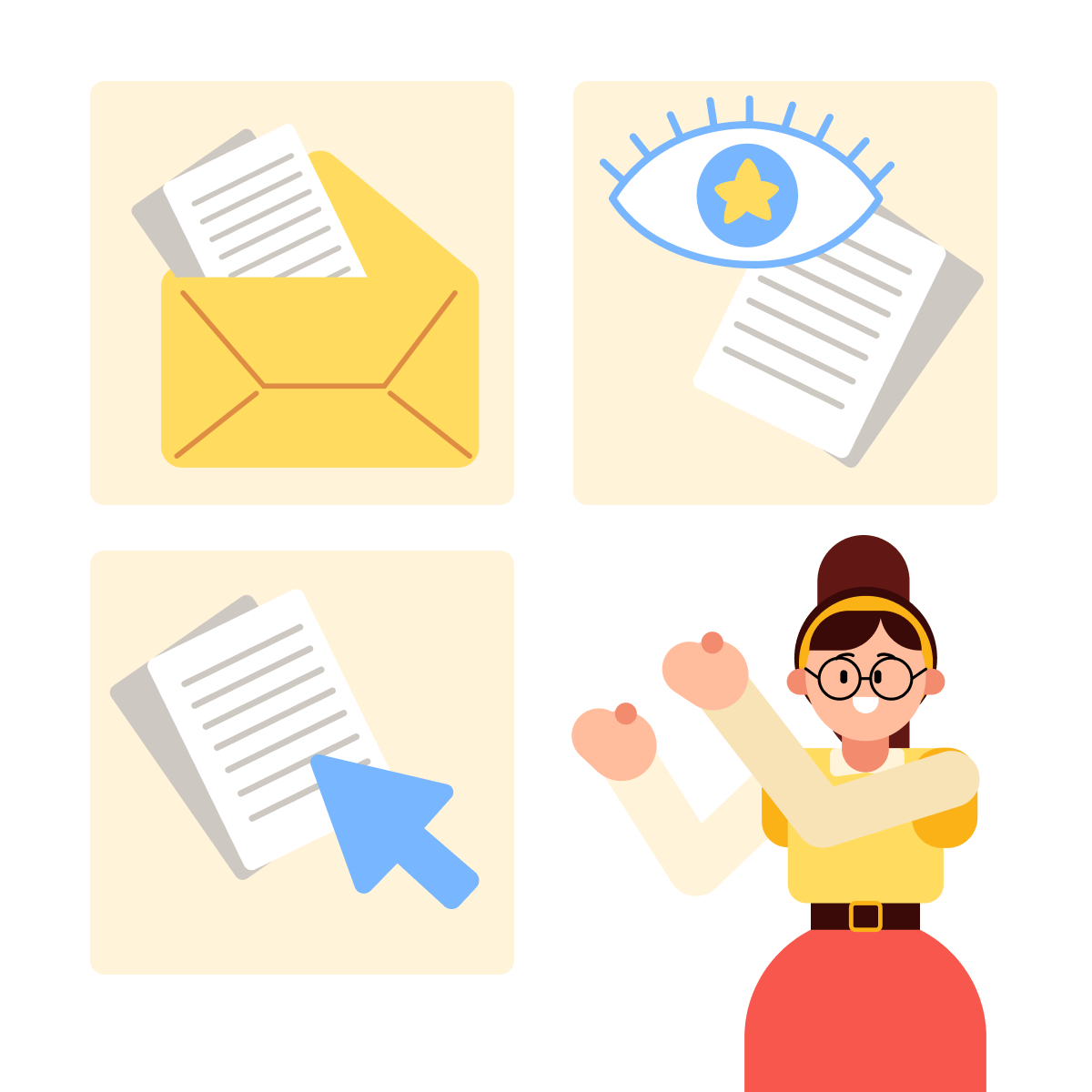
Email is one of the highest-ROI marketing channels — but only when people open, read, and click. Every email has three jobs:
- Get opened: Subject line
- Get read: Body copy
- Get clicked: CTA
Each job has its own copywriting principles.
Job 1 — Get Opened: Subject Lines
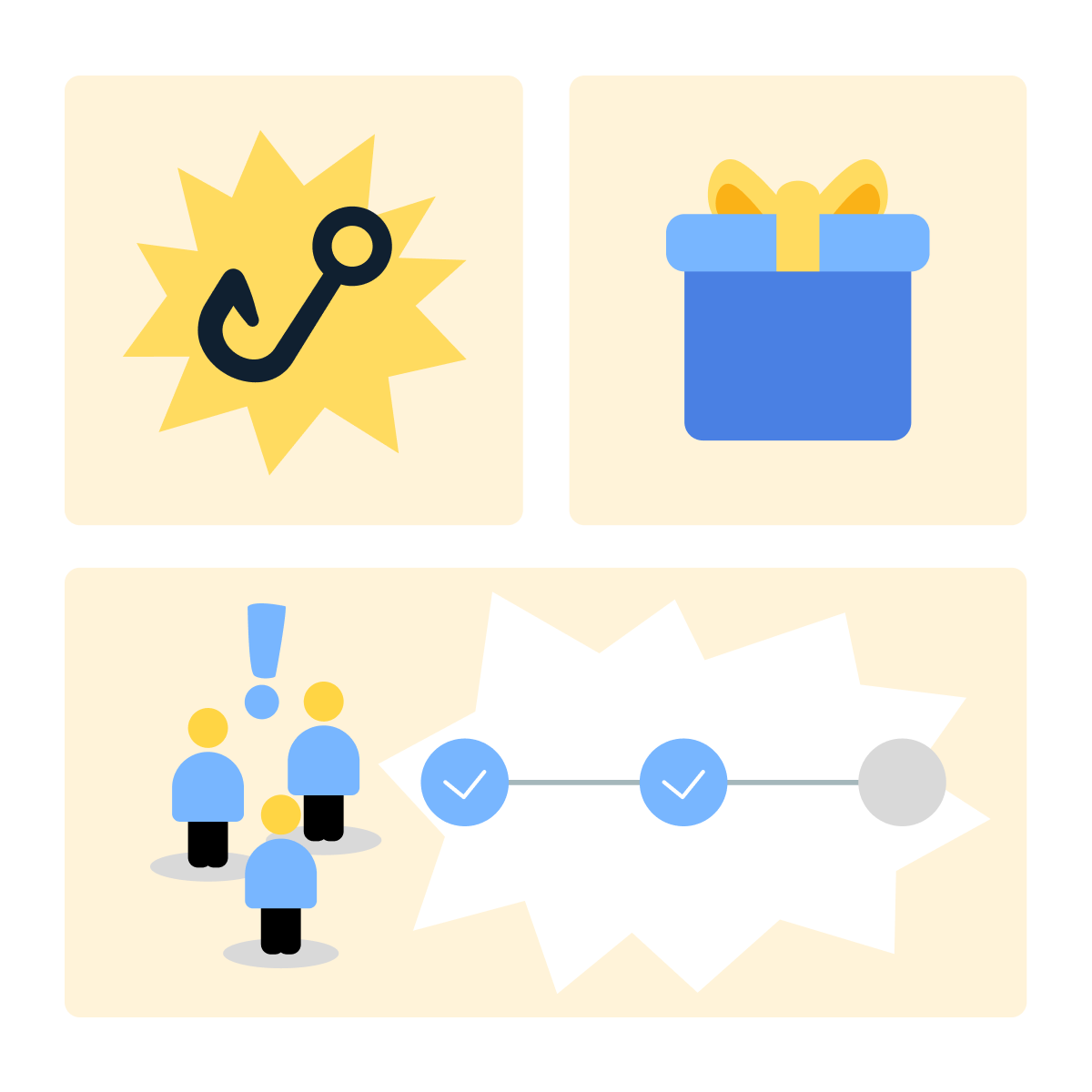
The subject line is the headline of your email. It determines whether the reader opens it or scrolls past. A strong subject line does one of three things: promises a specific benefit, creates curiosity, or signals urgency.
Here are three strong subject line formulas:
- Benefit-led: "The 20-minute workout busy parents actually stick with" — promises a specific, relevant outcome.
- Curiosity-led: "We almost didn't launch this" — creates an open loop the reader wants to close.
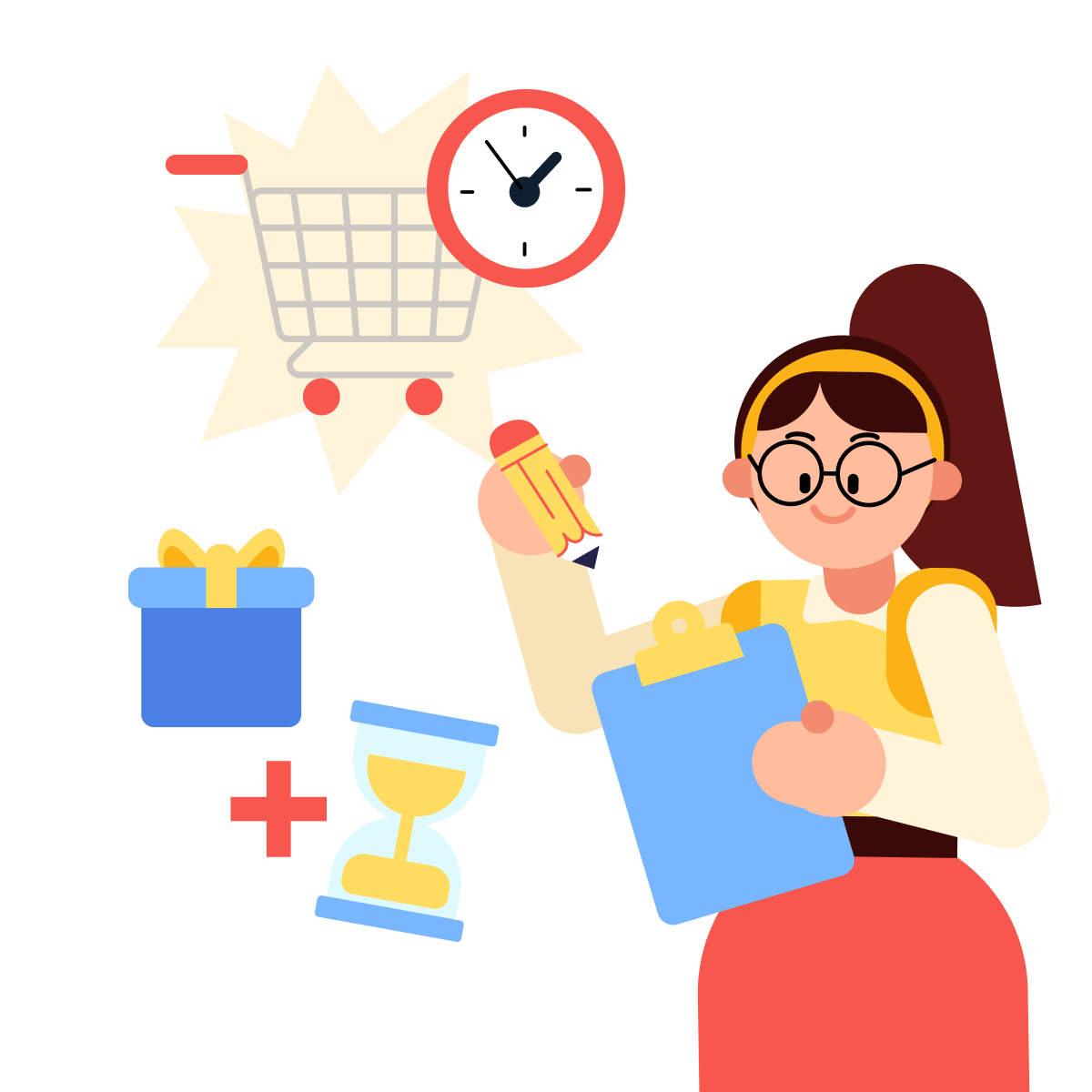
- Urgency-led: "Last chance: your free trial expires tonight" — gives a clear deadline that motivates action.
The strongest subject lines combine two of these: "Your cart's waiting — free shipping ends at midnight" (benefit + urgency).
practice preview
Interactive practice
Fill in the blank
Use Copy.ai to generate multiple subject line options for A/B testing.
Job 2 — Get Read: Email Body Copy
Now you have a subject line that will get readers to open the email. Once the reader opens, you have a few seconds to keep them. The body copy needs to deliver on the subject line's promise immediately — if the first line doesn't connect to what got them to open, they'll close it.
Effective email body copy follows a simple rhythm:
- Hook: First sentence continues the subject line's promise or curiosity.
- Value: 2-4 sentences delivering the core message. One idea per email — don't try to cover everything.
- CTA: Clear, single action. Tell the reader exactly what to do and why.
One email, one idea, one action.
Choose one
Your subject line is "The 20-minute workout busy parents actually stick with." Which opening line best delivers on that promise?
Job 3 — Get Clicked: Email CTAs
And now, final step — a strong CTA. This is where the reader decides whether to act. Strong email CTAs follow two rules.
First, be specific about what happens next — "Start your free plan" beats "Learn more."
Second, match the commitment to the relationship. A welcome email asks for a small step ("Set up your profile"). A later email asks for more ("Book your demo"). A promotional email goes for the conversion ("Claim your discount").
Choose one
The email introduces a new user to a project management tool. Which CTA works better?
Types of Email Campaigns
Not every email asks for a sale. Different campaign types serve different goals across the customer journey:
- Welcome emails: First impression. Deliver immediate value, set expectations.
- Educational emails: Teach something useful. Build trust and authority.
- Promotional emails: Drive a specific action such as buy, sign up, or claim an offer.
- Re-engagement emails: Win back inactive subscribers with a reminder or incentive.

Email Sequences
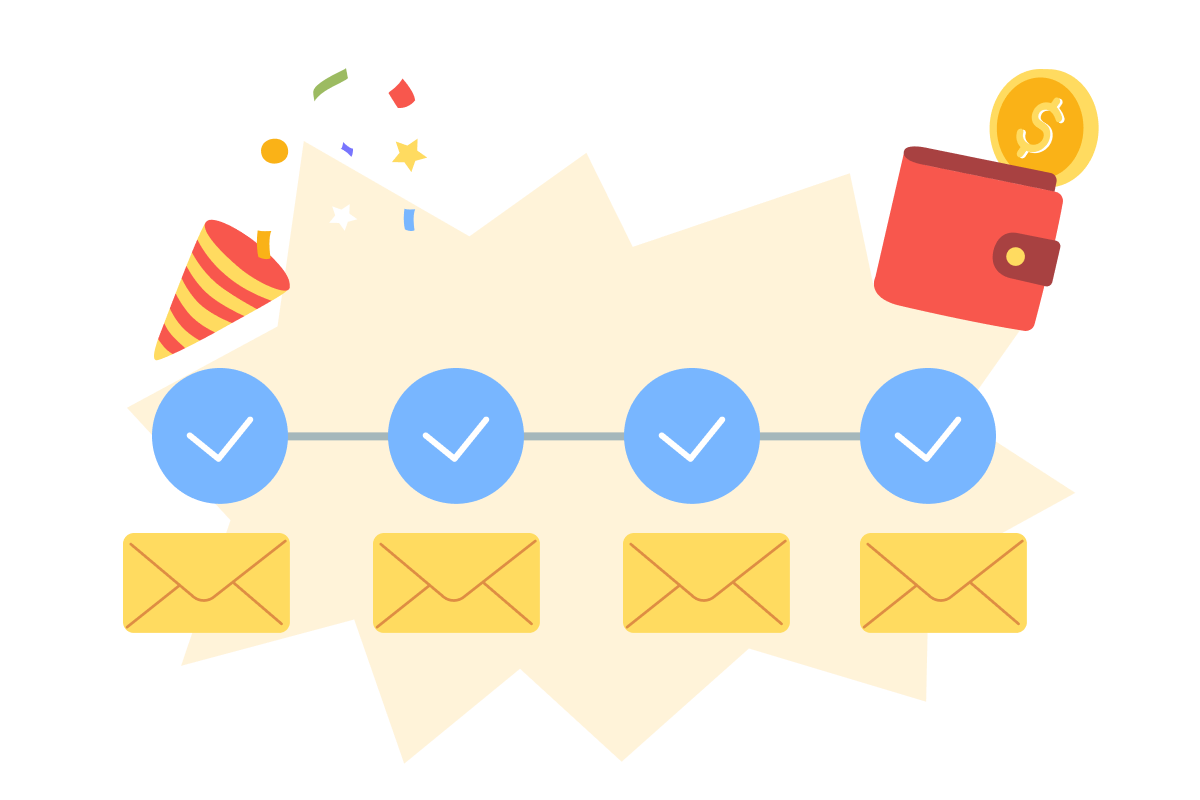
Most email campaigns aren't single emails — they're sequences that guide the reader through a journey. Each email in the sequence has a specific role, and the copy adapts based on where the reader is in that journey.
Here's a common four-email welcome sequence:
- Welcome: immediate value, expectations, small CTA (e.g., "Set up profile").
- Education: one key benefit in action, social proof or mini case study, CTA: try the feature.
- Objection handling: the most common hesitation, FAQ, or testimonial that resolves doubt, CTA: continue using.
- Conversion: the offer, benefit restatement + proof + urgency, CTA: upgrade, purchase, or commit.
Each email earns the right to the next ask.
Excellent!
Four emails, each with a distinct role. The welcome email delivers immediate value. The education email uses a real user story to demonstrate a feature. The objection handler addresses the biggest hesitation head-on. The conversion combines proof, a specific saving, and a deadline. That's a complete journey from "welcome" to "buy."
B2B Emails — What Changes
The structure stays the same — subject line, body, CTA. What changes is the content.
B2B subject lines lead with business outcomes or peer signals. Body copy frames value around team impact, with data points and role-specific language. CTAs stay lower commitment.
practice preview
Interactive practice
True / False
Which audience is this subject line written for?
practice preview
Interactive practice
True / False
Which audience is this subject line written for?
Social Media Copy
While email reaches people in their inbox, social media reaches them in a feed — a faster, more competitive space.
On social, your post is competing not just with other brands but with friends, news, and entertainment. The challenge is the same as email (earn attention first), but the speed is different. You have even less time.
Choose one
What's the primary job of the first line of a social media post?
Social Media Hook Formulas
Hooks work by creating a gap between what the reader knows and what they want to know. Here are four formulas that work across platforms:
- Bold claim: "Most product descriptions are feature dumps. Here's why that kills your conversions."
- Specific result: "We cut our email unsubscribe rate by 60% with one change."
- Relatable pain: "You spend 3 hours writing a landing page. The client says, 'It doesn't feel right.'"
- Contrarian take: "Stop A/B testing your subject lines. Here's what to test instead."
practice preview
Interactive practice
Fill in the blank
Use ChatGPT to generate hook variations for a social media post.
Post Structure by Platform
The hook gets attention. What comes next depends on the platform. LinkedIn suits longer professional posts (up to 1300 characters): hook → story or insight → takeaway → CTA or question. Best for thought leadership and case studies.
Instagram is visual-first, but captions matter too: hook → context → value → CTA. Hashtags help discoverability. Best for brand building and community content.
X (Twitter). Standard posts are 280 characters (Premium accounts can post up to 25K). Threads work for longer ideas: the first tweet is the hook, each following tweet adds one point. Best for quick takes, industry commentary, and driving traffic.
practice preview
Interactive practice
Match pairs
Tap a left item, then a right item to match.
B2B Social Media — What Changes
LinkedIn dominates B2B social. The hook formulas still apply, but the content shifts. Thought leadership, case studies, and data-driven insights build credibility.
Proof means naming companies and citing metrics — "We helped 340 finance teams reduce close time by 60%" is B2B proof. "Thousands of happy customers" is not.
Principles to carry into every email and social post:
- Subject lines and hooks earn the right to be read. Without them, the rest is invisible.
- One email, one idea, one action. Don't try to cover everything in a single message.
- Match the CTA to the relationship stage. Welcome emails ask small; conversion emails ask big.
- Hooks create a gap. Bold claim, specific result, relatable pain, or contrarian take — something that makes the reader stop.
- Not every post sells. Brand-building builds trust over time; direct response drives immediate action. Use both.
Next Steps
In the next lesson, you'll tackle the most competitive format in copywriting — ads. You'll write ad copy that cuts through noise across platforms, match your message to the reader's awareness level, and use AI to generate and score variations at scale.
Let's keep going!