AI Copywriting · Copywriting Essentials
Research and Audience
Research that powers great copy
Know Before You Write
Imagine prompting AI to write a product page — and getting back copy so generic it could belong to any brand. The problem is starting to draft before you clearly know what to say.
In this lesson, you'll learn the strategic work that comes before drafting: defining a clear offer, researching your audience with AI, applying psychology principles, and writing CTAs that match every stage of the funnel.

Select all that apply
What do you think a copywriter needs to define before writing anything?
The Three Foundations of Effective Copy
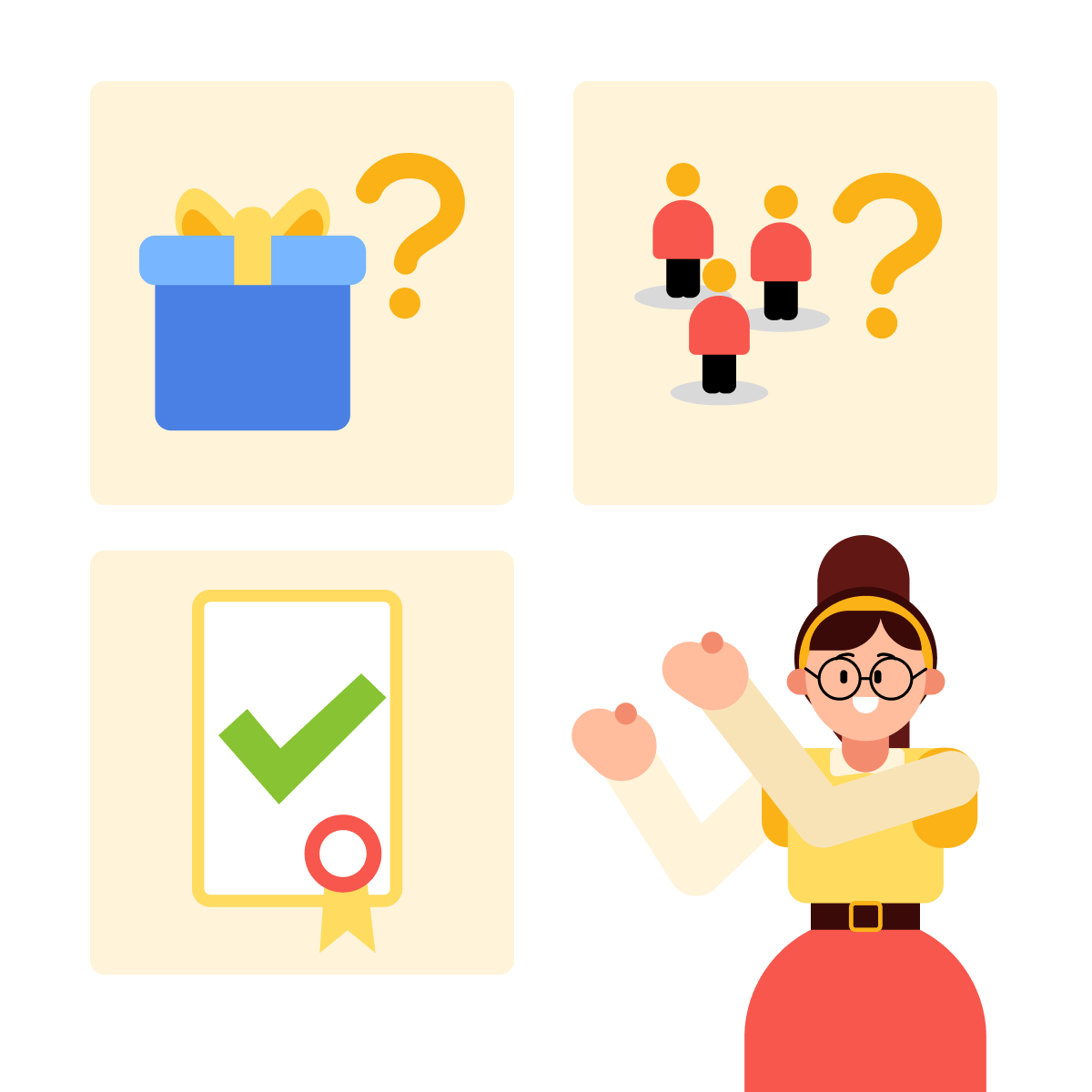
Every piece of persuasive copy rests on three elements:
- A clear offer: What are you selling and to whom?
- A defined audience: Who are you writing for, and what do they care about?
- A credible proof: Why should anyone believe your promise?
Let's explore each of them!
Start With a One-Sentence Offer
Before you open any AI tool, you need to answer one question: What exactly are you offering?
A one-sentence offer defines the product, the audience, and the core outcome in a single, clear statement. If you can't say it in one sentence, your copy will be unfocused — and so will every AI prompt you write from it.
Compare these two:
- Vague: "We help businesses grow with our platform."
- Clear: "We help e-commerce brands recover abandoned carts with automated email sequences that average 12% conversion."
The second version tells you who it's for, what it does, and what result to expect. That's a one-sentence offer.
practice preview
Interactive practice
Fill in the blank
Use Claude to sharpen a vague product idea into a focused one-sentence offer.
Great!
Notice how much work that single sentence does: it names the audience, the product, the mechanism, and a measurable outcome. Every piece of copy you write for this product can now point back to this sentence for direction.
The Message Triangle
A one-sentence offer gets you started. To build copy that convinces, you need three elements working together — what we call the message triangle.
- Offer: What are you selling and to whom?
- Outcome: What specific result does the reader get?
- Proof: Why should they believe you?
Every strong piece of copy answers all three questions. Weak copy is almost always missing one.
Choose one
"Our AI writing tool helps you create content 10x faster." Which element of the message triangle is missing?
Types of Proof
Proof doesn't always mean testimonials or case studies. There are several types you can use depending on what's available:
- Social proof: user numbers, reviews
- Process proof: explaining how or why something works
- Specificity proof: concrete details that signal credibility ("847 teams" feels more real than "hundreds of teams")
- Constraint proof: what you don't do ("We only work with B2B SaaS" signals expertise)
The more specific the proof, the stronger the trust.
practice preview
Interactive practice
Fill in the blank
Use Claude to build a complete message triangle for a product — offer, outcome, and proof.
Excellent!
You now have a repeatable structure for preparing any piece of copy. Define the offer, state the outcome, then choose the proof that makes it believable. This triangle will feed directly into every brief you write going forward.
Audience Research With AI
Your message triangle answers what you're saying. Audience research answers who you're saying it to — and how to say it in a way that resonates.
AI can accelerate research dramatically. Instead of spending time reading reviews and forums, you can prompt AI to surface pain points, desires, objections, and language patterns.

Pain Points and Desires
Strong copy connects these two things:
- Pain points — the specific frustrations, problems, and obstacles your audience faces right now.
- Desires — the outcomes and the future state your audience is trying to reach.
Building Audience Personas
The next step after recognizing pain points and desires is organizing that knowledge into a profile you can write to. An audience persona is a detailed profile of your ideal reader that goes beyond demographics.
Personas give you a specific person to write to, which is why you'll produce sharper, more emotionally relevant copy.

practice preview
Interactive practice
Fill in the blank
Use ChatGPT to create a detailed audience persona based on a target market.
Notice the last section — "her words." That's the most valuable part. When your copy uses the same language your audience uses to describe their problem, it feels like you're reading their mind. AI can quickly surface this language, and you can validate it against real reviews and forums.
You can dive deeper into the audience language research. Use ChatGPT: paste in actual reviews or forum quotes and ask it to find patterns — the words and phrases that repeat across multiple people.
When your copy mirrors that language, it creates instant recognition: "This is exactly my problem."

Audience Psychology in Your Prompts
Understanding your audience goes beyond demographics. Psychology principles help you tap into the emotional drivers behind decisions — and you can embed these principles directly into your AI prompts.
These three principles show up in effective copy because they tap into fundamental human decision-making patterns:
- Loss aversion hits hardest when your audience is already experiencing a cost. Lead with what they're losing.
- Social proof works best when your audience feels uncertain or is comparing options. Numbers and peer validation reduce perceived risk.
- Urgency and scarcity accelerate decisions when the reader is already interested. A deadline or limited quantity pushes them past hesitation.
The key is choosing the principle that matches where your reader is emotionally, not stacking all three at once.
practice preview
Interactive practice
True / False
Which principle is being used in this copy line?
practice preview
Interactive practice
True / False
Which principle is being used in this copy line?
practice preview
Interactive practice
True / False
Which principle is being used in this copy line?
practice preview
Interactive practice
Fill in the blank
Embed a specific psychology principle into your prompt to make the copy emotionally targeted.
See how loss aversion shapes the entire tone — the copy leads with what the reader is already losing, not what they could gain. The psychology principle gave AI a clear emotional direction to write from. Different principles produce fundamentally different copy for the same product.
CTAs That Work
The final element is the CTA — the moment you ask the reader to act. The key to effective CTAs is matching the ask to the reader's awareness stage.
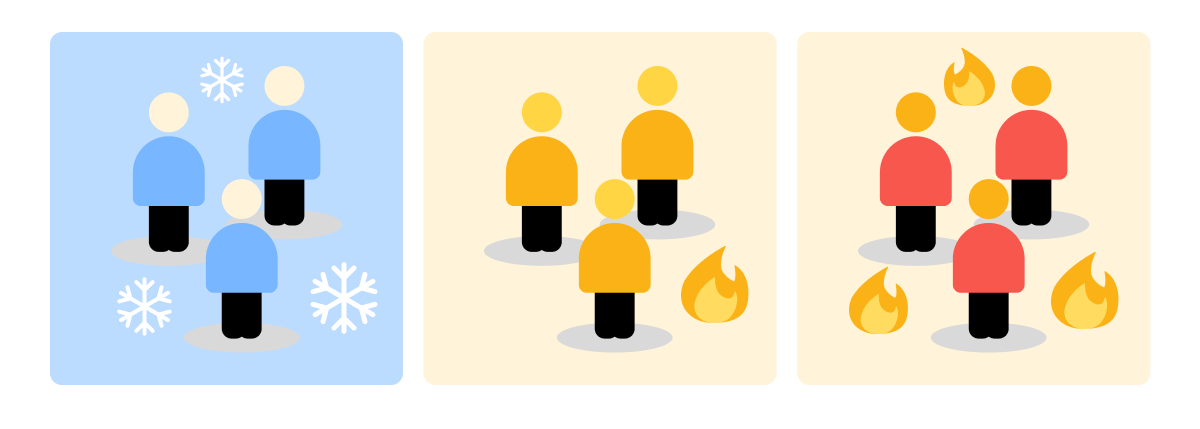
Not every reader is in the same place in your funnel — some are just learning about you, others are comparing options, and some are ready to buy.
- Cold audience: top of the funnel, not ready to buy, need a low-commitment next step (e.g., "See how it works," "Read the case study")
- Warm audience: middle of the funnel, comparing options and considering your solution, need a medium-commitment next step (e.g., "Start your free trial," "Book a 15-minute demo")
- Hot audience: bottom of the funnel, ready to act and choose a solution, need a high-commitment next step with urgency or specificity (e.g., "Get started today," "Claim your spot — 12 left")
practice preview
Interactive practice
Fill in the blank
Use Copy.ai to quickly generate CTA variations for different awareness levels.
Great Work!
Notice how the commitment level scales with the funnel stage. A cold reader sees "browse customer stories" — zero risk. A hot reader sees "lock in this year's pricing" — urgency and a direct action. Matching the CTA to the reader's readiness is what makes it convert.

Before writing any copy, define these three foundations:
- One-sentence offer: Who it's for, what it does, what outcome it delivers.
- Message triangle: Offer + Outcome + Proof. If any element is missing, the copy won't convince.
- Audience persona: Their frustration, desire, objection, and the language they use.
Next Steps
In the next lesson, you'll put this preparation to work. You'll learn AIDA — a proven persuasive framework — and run the full brief → draft → critique → rewrite loop on a real draft. You'll also pick up two techniques for making any copy clearer and more direct.
Let's keep going!