Claude · Prompting for Claude
Analytical Frameworks
Use various frameworks for deep analysis
Enhancing Claude's Analysis
In the last lesson, creative frames opened possibilities up. Analytical frameworks do the opposite job: they give Claude a fixed structure to think within, turning a sprawling question into focused, organized analysis. Same core skill you've been building — handing Claude a lens — pointed now at rigor instead of range.

Claude Thinks in Frameworks
When you ask Claude an open-ended question, it can organize its thinking through analytical frameworks. This turns a vague answer into a focused, structured one.
And while the examples here are business-focused, the same approach works for anything complex: career decisions, policy questions, creative projects, research.
The Skill Is Choosing the Lens
Running a framework is the easy part — Claude does that on request. The real skill is picking the right one for your question.
A framework built for internal strengths won't tell you about market pressure, and one built for competition won't sort your product line. Match the lens to what you actually need to see.
practice preview
Interactive practice
Fill in the blank
Request an analysis using multiple frameworks. Use the provided option.
What Just Happened?
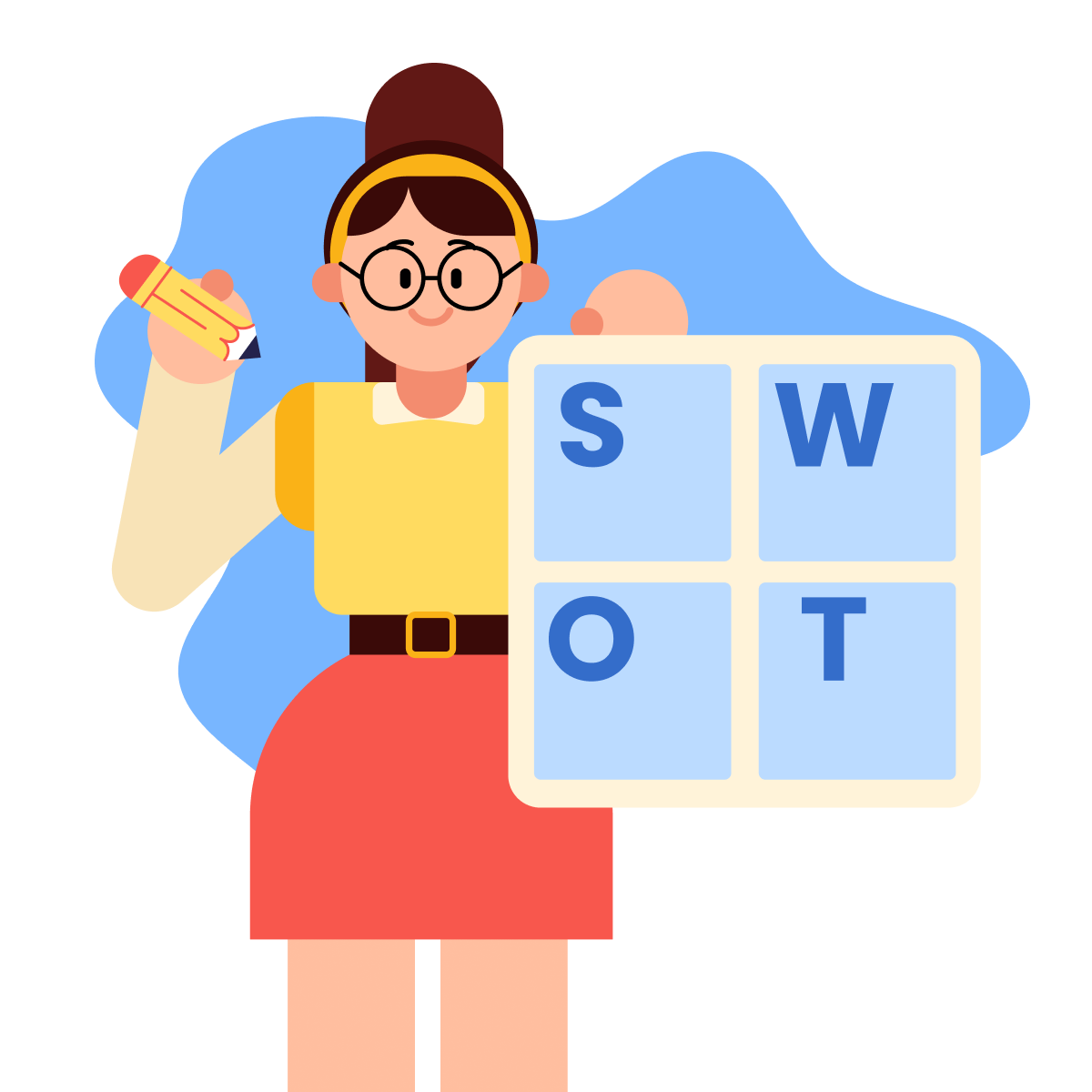
Claude used a SWOT framework to structure that analysis. SWOT stands for Strengths, Weaknesses, Opportunities, and Threats — it's a way to evaluate any subject from four angles at once, covering both internal factors and external ones.
Knowing the framework name is what lets you request it. That's the core skill here: telling Claude which lens to use.
practice preview
Interactive practice
Put in order
Based on the above, arrange the steps to create a logical SWOT analysis process.
Combining Two Frameworks
One framework gives you one angle. But what if you're building a product strategy and need to understand both what your company is good at and what the market looks like?
That's when combining two frameworks in one prompt becomes powerful.
Here are two frameworks worth knowing before you try it:
- VRIO (Value, Rarity, Imitability, Organization) breaks down what a company has going for it internally and whether those advantages are actually hard for competitors to copy.
- Porter's Five Forces maps five sources of pressure that shape how competitive an industry is: new players entering, supplier influence, buyer power, substitute products, and rivalry between existing competitors.
Together, they cover what neither can alone: internal capability and external competition.
practice preview
Interactive practice
Fill in the blank
Using the given options, complete the prompt to combine two complementary frameworks for business analysis.
See how each framework did a different job? VRIO looked inward — what the company already has. Porter's Five Forces looked outward — what the market is doing to it. The combination gives you a more complete picture than either would alone.
Choose one
You want to understand whether your company's biggest advantage is something rivals can easily copy. Before you prompt Claude, which framework fits that question best?
Applying Frameworks in Sequence
Sometimes one framework feeds into the next. Instead of running them side by side, you apply them in order, each step building on what came before.
This has a name beyond business analysis — it's a prompt chain, and it's one of the most reliable ways to work with Claude: break a big task into steps, and each step gets Claude's full attention instead of one overloaded prompt dropping the ball.
Three frameworks that work well in sequence:
- BCG Matrix shows which of a company's products are growing, which are steady earners, and which are worth dropping.
- Scenario Planning helps you think through multiple possible futures instead of betting everything on one outcome.
- TOWS Analysis takes your SWOT findings and turns them into actual next steps.
The logic of the chain: first assess what you have, then explore what could happen, then decide what to do about it. Each framework hands its findings to the next.
practice preview
Interactive practice
Fill in the blank
Start the chain. Complete prompt 1 to assess the current portfolio — its output becomes the input for the next step.
practice preview
Interactive practice
Fill in the blank
Now the key move: the next prompt doesn't start fresh — it feeds on what you just got. Write prompt 2 so it explicitly uses the BCG output above.
Great Job!
That prompt walked Claude through all three stages in order, and each one built on the last.
That's the power of sequential analysis: the output of one framework becomes the input for the next. Because each step fed the next, the final strategy actually rests on the portfolio analysis you started with — that's a coherent chain.
Choose one
You chain three prompts, but the result feels off. Prompt 1 (BCG) flagged the legacy product as a "Dog" to wind down. Prompt 3 (TOWS) then recommends heavy investment in that same legacy product. What broke, and what's the fix?
Practical Application
Now that you're familiar with different analytical frameworks, let's test what you've learned!

practice preview
Interactive practice
Put in order
Arrange these analytical frameworks in a logical sequence for comprehensive business strategy development.
practice preview
Interactive practice
Match pairs
Tap a left item, then a right item to match.
Well Done!
You now know how to guide Claude through structured frameworks — individually, in combination, and in sequence.
These techniques work for business strategy, but they apply just as well to any complex topic where you need organized, thorough analysis.
You've learned to give Claude a single lens — and to chain several into one analysis. Next, you'll go a step further: instead of analyzing one subject from fixed angles, you'll have Claude trace how things connect — across different fields, through a whole system, and in ripples of cause and effect. Same instinct, wider reach.
Until then, keep practicing with multiple frameworks to enhance your analytical capabilities!