AI for Business Operations · Leading Smarter with AI
Ethical Leadership & Governance in an AI World
Use AI safely and protect the data
Leading AI Responsibly
Throughout this guide, you've seen how AI accelerates research, communication, presentations, meetings, and data analysis.
But with this power comes significant risk — and without the right guardrails, AI adoption can create problems far worse than the inefficiencies it solves.
The Governance Gap
Imagine this:
- Your engineering team is pasting client code into ChatGPT to debug faster.
- Your sales team is uploading prospect lists to analyze patterns.
Both think they're being productive.
However, they're actually creating massive security risks — and you don't have a policy to stop them.
AI adoption without governance is like handing out company credit cards without spending limits.
Choose one
What could be the biggest risk of AI adoption without clear policies?
Keeping this in mind, leadership's job isn't to block AI. I's to create clear, accessible policies that enable safe use.
Building AI Guardrails
So, let's establish approval processes and make guidelines easy to follow.
We'll use Notion to create a living policy document and reference wiki that your team can actually use.
Drafting Your AI Use Policy
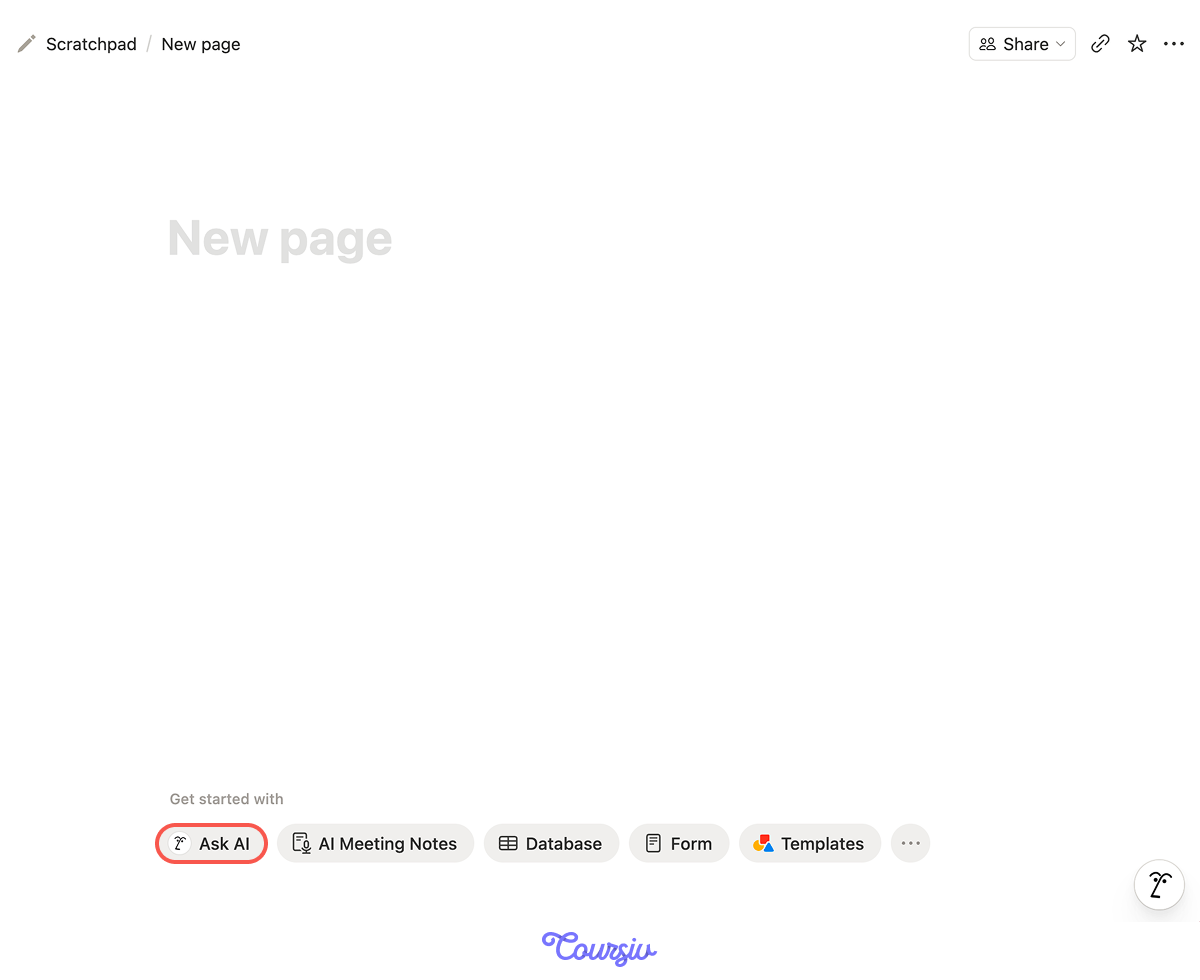
Start by using Notion AI to generate the initial structure.
This gives you a framework to refine rather than starting from scratch.
practice preview
Interactive practice
Fill in the blank
Use Notion AI to draft the foundation of your responsible AI policy.
This structure provides the foundation.
You can then refine it to match your organization's specific risks and context.
Creating a Red/Yellow/Green Tool Framework
Once your structure is ready, the next step is to tell people which tools are safe for what types of data.
They need concrete guidance.
The key point here is that not all AI tools handle data the same way. The difference: whether the tool uses your inputs for training.
For example, free versions of ChatGPT, Claude, and similar tools may use your prompts to improve their models. This means sensitive data could appear in responses to other users.
In turn, enterprise contracts change this. Tools like ChatGPT Enterprise, Claude for Enterprise, or Gemini for Business explicitly guarantee your data won't be used for training.
This distinction determines what's safe: free tools work for public content, but sensitive data requires enterprise-grade privacy protections.

Select all that apply
With all that in mind, what do you think will make an AI governance framework actually usable for teams?
So, the Red/Yellow/Green model provides instant clarity by categorizing data sensitivity and appropriate tools.
To implement this idea, create a Notion database to categorize tools and data types.
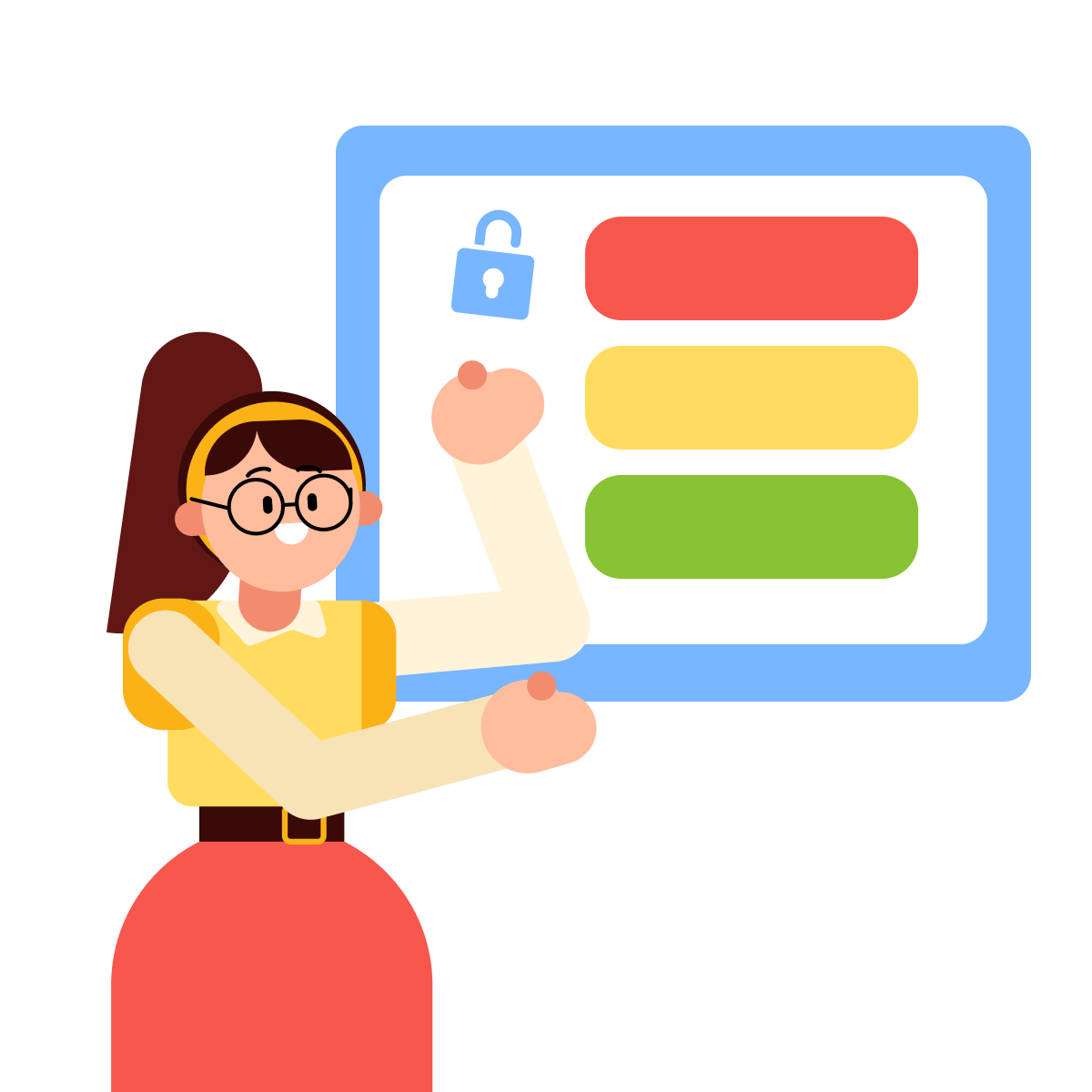
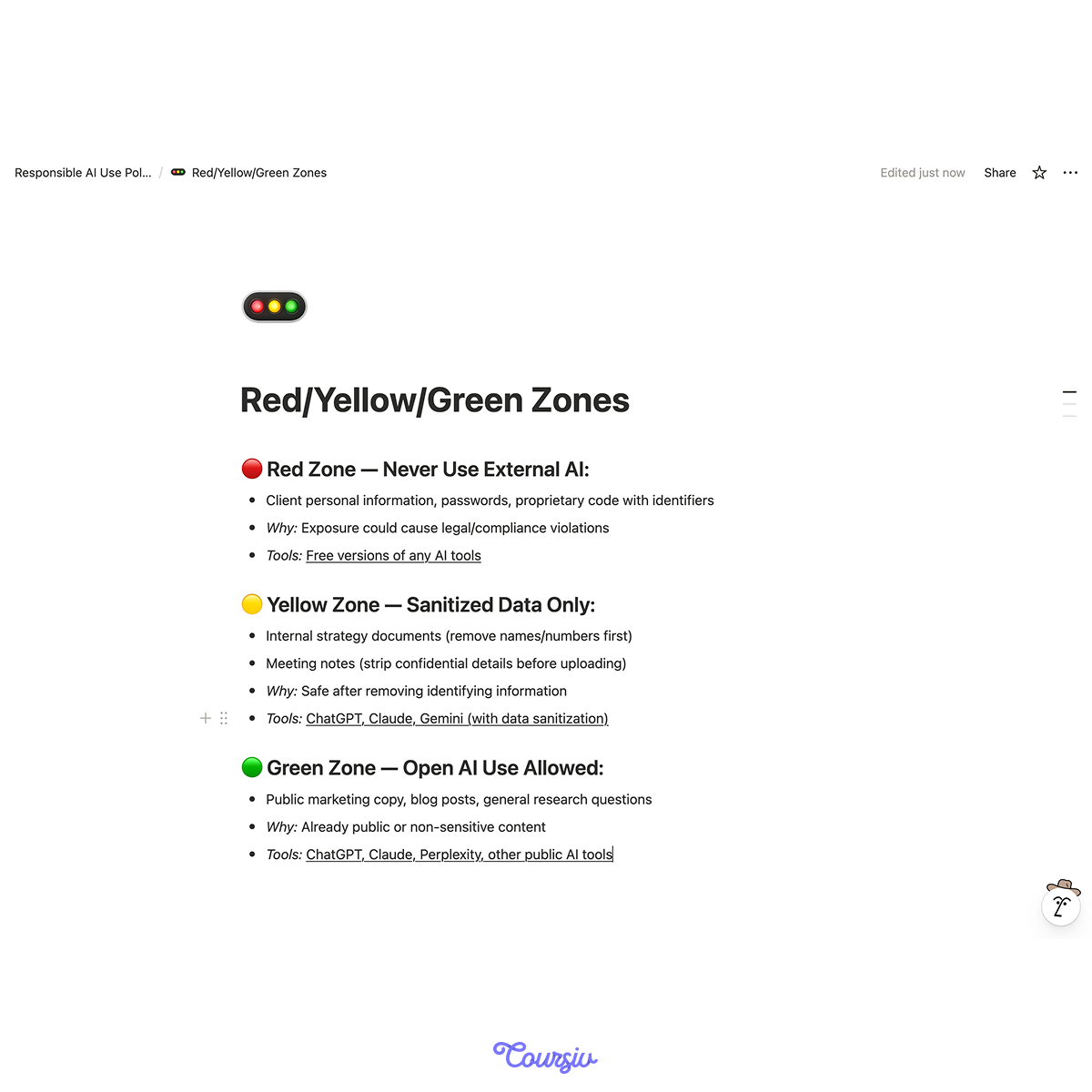
How you can structure your reference database in Notion:
Red Zone — Never Use External AI:
- Client personal information, passwords, proprietary code with identifiers
- Why: Exposure could cause legal/compliance violations
- Internal strategy documents (remove names/numbers first)
- Meeting notes (strip confidential details before uploading)
- Why: Safe after removing identifying information
- Public marketing copy, blog posts, general research questions
- Why: Already public or non-sensitive content
Then add approved tools to each category. For example:
- Red: No external AI tools
- Yellow: ChatGPT, Claude (with data sanitization)
- Green: ChatGPT, Claude, Perplexity, public AI tools
Identifying AI Risk Areas
Beyond data security, leaders must also consider where AI introduces bias or undermines critical judgment.
Select all that apply
In which scenarios should AI never be the sole decision-maker?
AI governance works only when it is anchored in clear moments where human judgment steps in. In practice, this means AI can surface insights while people remain the ones who make the final calls.
Every AI-generated output still goes through human review, and experts retain the authority to override any recommendation the system produces.
Ultimately, accountability never shifts — a real person is responsible for each decision made with AI's help.
Making Governance Accessible
The last step is to make your policy work.
But when does it work? When it's visible to the team!
Choose one
What do you think is the best way to ensure teams follow AI governance policies?
practice preview
Interactive practice
Put in order
Now, based on what you learned, arrange the steps for implementing AI governance.
Congratulations!
By learning how to create AI governance, you've now completed the full course!
Now you can research strategically, communicate powerfully, analyze data, and govern AI responsibly.

Remember: the future belongs to leaders who can harness AI while maintaining judgment, ethics, and accountability.
And now, you know how to do it all!