AI for Business Operations · Leading Smarter with AI
Scenario Planning & Strategic Decision-Making
Stress-test your strategy before the board does
The Blind Spot Problem
Think of a situation: you've spent weeks preparing your strategic plan for the board, but there's a nagging feeling: "What if I'm missing something?" Does that sound familiar?
That's when you need someone to challenge your thinking, and AI can be exactly that. Let's learn more about it!

Choose one
Let's start with a quick quiz: when preparing a major strategy, what's the biggest risk?
Yes, it happens — when you're too close to your work, you can stop seeing the downsides. And asking your team to poke holes in something they helped create also may not produce honest criticism.
What you need is a skeptical outsider who'll challenge every assumption.
The Devil's Advocate You Need
Claude can be the valuable skeptical outsider you need!

Select all that apply
Given what you know about Claude, how do you think it could help you?
To see how this works in action, imagine you gave Claude your strategic plan and now want to analyze it objectively.
practice preview
Interactive practice
Fill in the blank
Complete the prompt to ask Claude to challenge your strategic plan from a specific perspective.
Choose one
Looking at this feedback, what makes it valuable for strategy preparation?
Choose one
Why do you think Claude was able to give you a valuable output?
You can give Claude a role — a skeptical investor, a critical board member, a worried CFO — and it will challenge your thinking from that independent perspective.
This is called strategic war-gaming: testing your strategy against different adversarial viewpoints before the real conversation happens.
The key? Specific roles produce specific challenges.
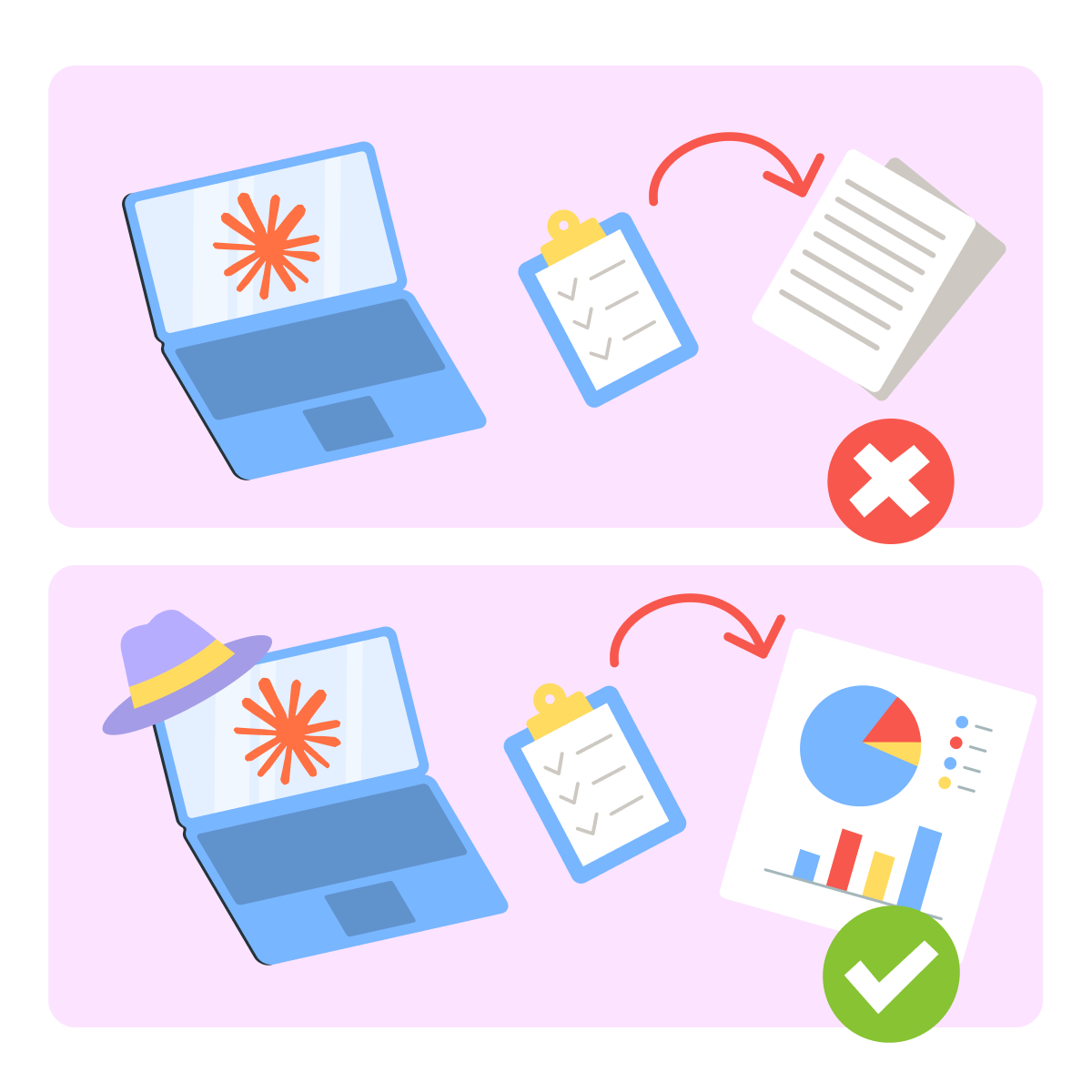
The more specific the role, the more useful the challenge. If you just ask to "be critical," it will most probably produce generic feedback.
In turn, "Act as a CFO worried about cash flow" will definitely produce targeted financial scrutiny.
Let's look at a couple more examples next!
practice preview
Interactive practice
True / False
Decide which role will produce more useful strategic feedback.
practice preview
Interactive practice
True / False
Now, evaluate this role assignment.
Building on the war-gaming concept, this is how you can develop strong adversarial roles:
- Stakeholder type: investor, board member, customer, regulator
- Their bias or concern: risk-averse, growth-focused, cost-conscious
- Their experience: "Who's seen this fail before?" or "Who values operational excellence?"
Beyond Pre-Mortems
The next thing you should know is that strategic war-gaming isn't just about finding flaws.
You can also use Claude to role-play negotiations, test messaging, or explore scenarios.
Select all that apply
Which strategic scenarios would benefit from role-playing with Claude?
The pattern remains the same:
- You need to test your thinking against adversarial perspectives or explore how different stakeholders might react.
- You give a fitting role to Claude.
- Claude becomes your strategic sparring partner.
practice preview
Interactive practice
Fill in the blank
Practice a difficult stakeholder conversation by giving Claude a specific perspective.
See what happened? Claude didn't just say "the CFO might object." It role-played the actual pushback and told you specifically what would successfully address those concerns.
This is how you prepare for high-stakes conversations — by practicing them first.
So, to sum it all up, use Claude for strategic war-gaming when you're preparing for board meetings, investor pitches, difficult stakeholder conversations, or major decisions that need stress-testing.
It'll be your sparring partner who's brutally honest because it has no reason to be polite.

However, what Claude doesn't replace is your own judgment in terms of:
- Understanding organizational politics
- Reading people's actual reactions
- Navigating relationship dynamics in real-time.
It helps you prepare. You still need to lead the actual conversation.
Now, to test your understanding, imagine you're preparing to present a major product pivot to your board.
You'll need to apply what you learned about strategic war-gaming to approach this situation correctly.
practice preview
Interactive practice
Put in order
Apply what you learned and arrange these steps in the correct order for effective strategic preparation.
Great Job!
Now that you've learned a new skill: using AI as a strategic adversary, you have a tool for stress-testing strategies without the politics of human feedback.
- Use Claude as a devil's advocate to challenge strategies before facing real stakeholders.
- Specific roles produce specific feedback. Define stakeholder type, bias, and experience.
- Pre-mortems surface blind spots while you can still fix them.
- Role-play difficult conversations to prepare for objections and refine your approach.
- Claude helps you prepare — you still lead the actual strategic decisions.
Next, you'll see how to use AI for meeting intelligence — recording, transcribing, and extracting action items automatically so no conversation gets lost.
Time to master meeting productivity!