Build a Strong Portfolio with AI · Creating an Effective Portfolio
Define Your Visual Identity
Find your style without design school
Your Portfolio Needs a Look
What separates amateur portfolios from professional ones? Visual consistency.
Colors that work together. A clear style. An intentional atmosphere that makes people think, "This person knows what they're doing."
The good news: you don't need design school to create this. AI can help you discover your visual identity in minutes!

What Is a Visual Identity?
Think of the visual identity as your portfolio's personality. It's the first impression people get before they even read your work.
Hence, your visual identity is the combination of colors, style, and atmosphere that makes your portfolio feel like yours.

Choose one
Before diving in, why do you think visual consistency matters in a portfolio?
The Visual Chaos Problem
Most people building portfolios make the same mistake: they start adding content without deciding how it should look first.
One project uses bright colors. Another uses muted tones. Fonts don't match. The overall feeling is... scattered.
It's not that individual pieces look bad — it's that nothing feels intentional. Professional portfolios have a cohesive visual language that ties everything together.
Select all that apply
What elements do you think make up a good visual identity?
Choose one
Next, if you're a consultant who works with corporate clients, which visual identity makes the most sense?
The corporate world is only one example, and it requires certain visual language. But what about other cases? Portfolios can be styled in various ways: modern and minimal, warm and approachable, bold and creative.
Which style to choose? AI will help you define this clearly!
Meet Midjourney
Midjourney is an AI tool that generates images from text descriptions. But it's not just for creating artwork — it's perfect for exploring visual ideas before you commit to anything.

You can ask Midjourney to generate moodboards, color palettes, and style references. It shows you what different visual identities look like, helping you figure out what resonates with you.
No design experience required. You just describe what you want, and Midjourney visualizes it.
For example, say you want a portfolio that feels modern but approachable. Not too corporate, not too casual.
practice preview
Interactive practice
Fill in the blank
Ask Midjourney to create a visual reference for your portfolio's style.
See what happened? You described the feeling you wanted, and Midjourney turned it into a visual reference.
Now you're not guessing what "modern but friendly" means — you can see it, refine it, and use it as your guide.

practice preview
Interactive practice
True / False
Considering what you saw above, decide if this approach makes sense for defining your visual identity.
Trying Different Styles
You're not locked into your first attempt. Midjourney lets you experiment with different aesthetics quickly.
Want to see what a bold, high-contrast version looks like? Or a softer, pastel approach? Generate a few options and compare them side by side.
This is how you discover your natural aesthetic — by seeing what resonates emotionally when you look at it.

practice preview
Interactive practice
Fill in the blank
Generate a different moodboard to compare aesthetics.
Choose one
So, you generated more than one moodboard. What should you do next?
Building Your Identity Sheet in Canva
Once you choose your visual direction, it's time to turn it into a reference document you can use while building your portfolio.
Canva lets you combine your chosen colors, style examples, and atmosphere into one clean visual identity sheet.
This becomes your guide — every time you make a design decision, you check: Does this match my identity sheet?
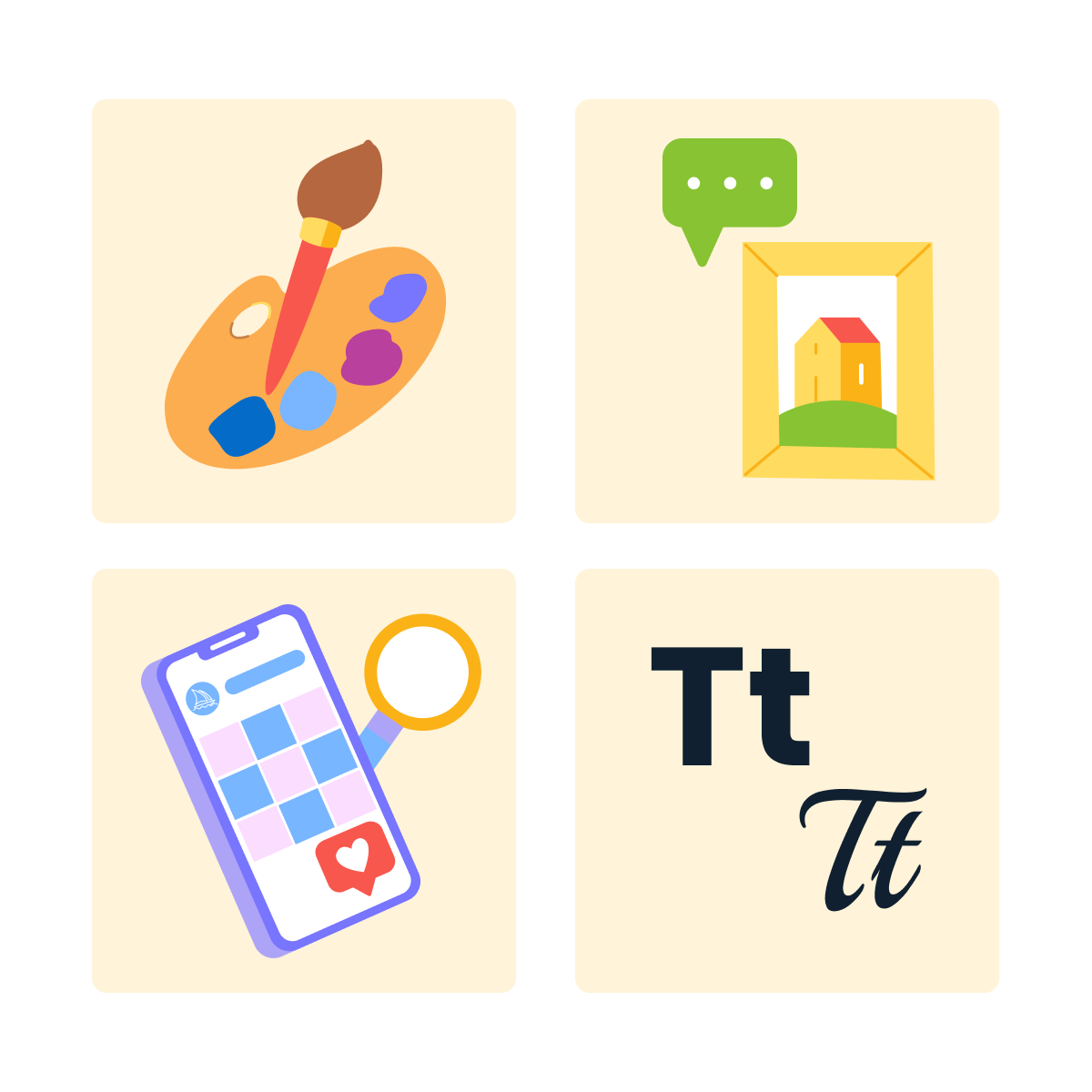
To elaborate on what you already learned, your identity sheet should include:
- 3-5 core colors (pulled from your chosen moodboard)
- Style descriptors (minimalist, warm, approachable)
- Visual examples (screenshots from your Midjourney moodboard)
- Font suggestions (optional — Canva can recommend these)
Choose one
But why create a visual identity sheet instead of just remembering what you liked?
Okay, you know why you need it and what to include there, but how to create this sheet?
Well, instead of building everything manually, Canva can generate the layout for you:
- Create a new document.
- Upload your chosen Midjourney moodboard in the space for prompts.
- Put this prompt: "Create a visual identity sheet using these images. Include a color palette, style keywords, and font suggestions in a clean layout."
As a result, Canva will instantly build a structured identity sheet you can refine in seconds.
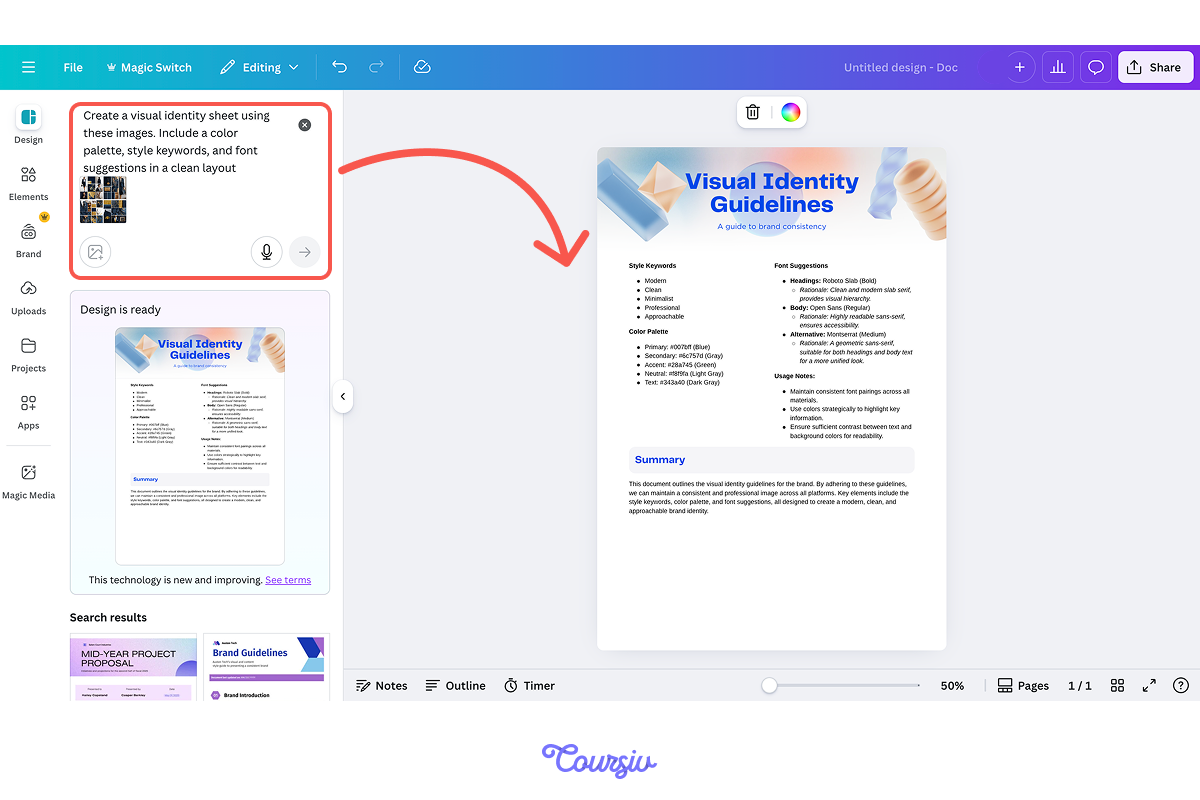
Just like that, you will have a mock-up visual identity guideline in a few minutes! Then, you can manually edit the document if you want to improve the result.
When you're done, save it somewhere accessible — you'll reference it constantly as you build your portfolio sections.
You've Defined Your Visual DNA!
You just learned how to use AI to discover and document your portfolio's visual identity — something that used to require hiring a brand designer.
Now you have a clear aesthetic direction. Every design choice from here forward will align with this foundation.
In the next lesson, you'll learn how to choose and curate your best work — picking 3-5 strong projects and writing clear, compelling descriptions using AI.
Let's keep building!
- Visual consistency makes portfolios look professional, even if the content is simple.
- Midjourney helps you explore styles visually before committing to one.
- Create a visual identity sheet in Canva to guide all future design decisions.
- Result: your portfolio's "visual DNA" in one clear reference document.