Turbocharge Your Productivity with AI · AI-Powered Productivity
Read Smart with AI Summaries
Summarize fast, learn deep, save time
Process Any Document in Minutes
In the previous lesson, you learned to extract key insights quickly for decisions. But what about when you need to truly understand complex material — not just pull facts, but learn deeply?
Summarization isn't just about speed. It's about comprehension, verification, and adapting information for different purposes. Let's master the art of learning faster!
Beyond Quick Extraction
The previous lesson taught you fast extraction for action. Now, we'll focus on deep understanding and retention.
Choose one
What's the main benefit of AI summarization for learning?
Think about it: the difference between extraction and comprehension.
Quick extraction:
- Pull actionable insights fast
- Categorize for decisions
- Get output — bullet points, patterns
Deep summarization:
- Process for understanding
- Verify accuracy across tools
- Get output — structured summaries for learning
Both have their place in your workflow.
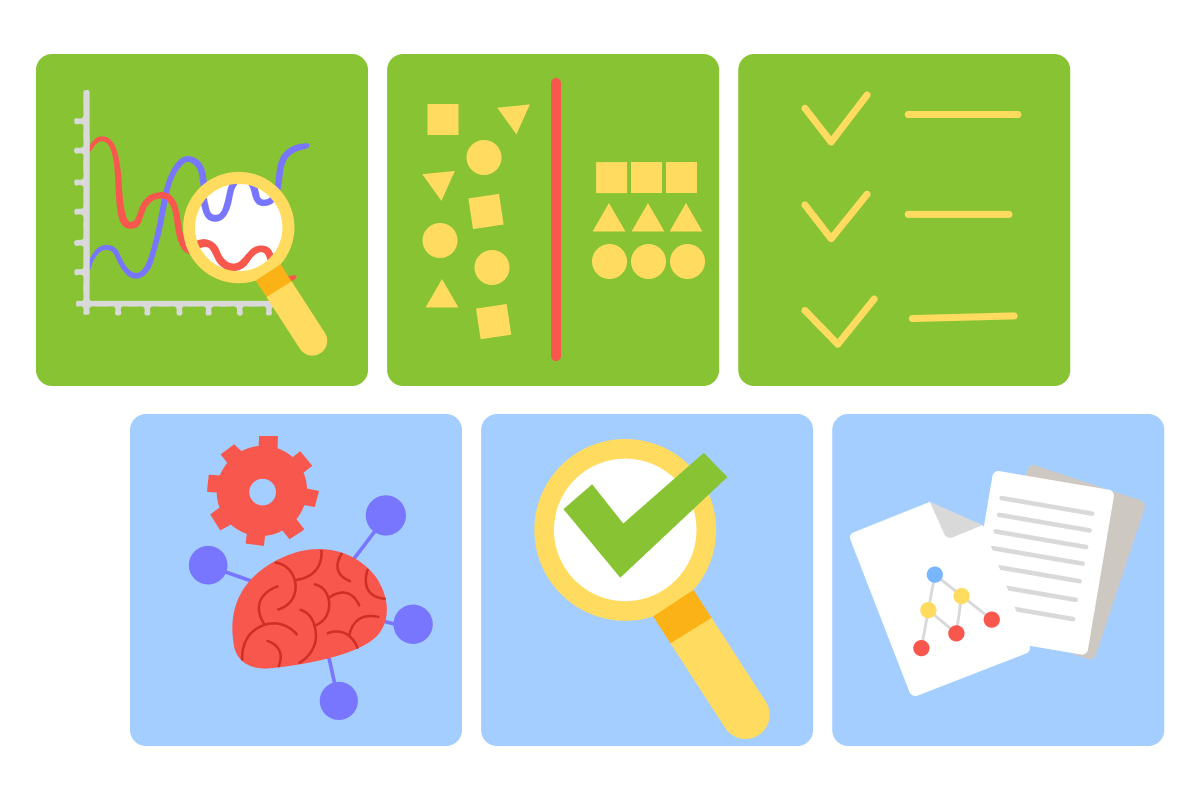
Creating Effective Summaries
Not all summaries are equal. The best ones match your specific purpose and comprehension level.
For example, imagine you have a bid document, a 15-page market research report on AI adoption in healthcare.
Going through it might be overwhelming, and here's where AI can help!
practice preview
Interactive practice
Fill in the blank
Complete this prompt to see how you can create a useful summary.
See how the summary focuses on decision-relevant information? That's purposeful summarization!
Now let's verify accuracy.
Cross-Checking with Multiple AI Tools
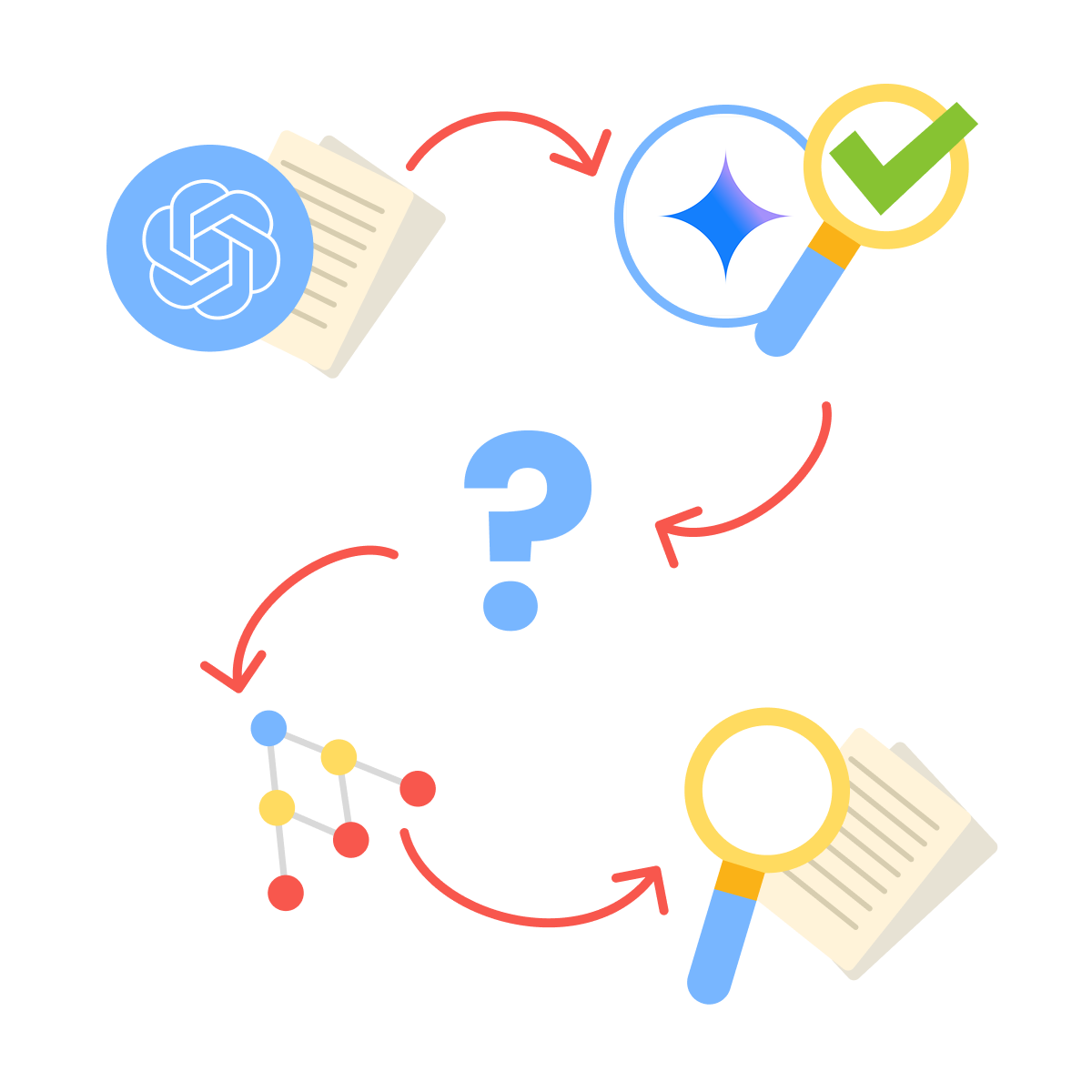
Different AI tools sometimes emphasize different aspects. Comparing summaries catches gaps and ensures accuracy.
Why use Google Gemini alongside ChatGPT:
- Different training data — may catch nuances ChatGPT missed
- Alternative framing — different emphasis reveals blind spots
- Accuracy check — inconsistencies flag areas to review in the source
- Comprehensive coverage — a combined view ensures nothing important is overlooked
Think of it as getting a second opinion.
practice preview
Interactive practice
Fill in the blank
Complete this prompt to see how to cross-check your summary.
Perfect! The second AI caught an important context that the first summary didn't emphasize. This is why cross-checking matters for true understanding.

Summary Formats for Learning
How you structure summaries affects comprehension and retention.
Choose the summary format that you'll ask from AI based on what you need.
Here are some effective summary formats for you to consider:
- Executive Summary: 3-sentence overview; Key metrics; Primary recommendation.
- Bullet Point Breakdown: Main findings (3-5 points); Supporting data; Implications.
- Question-Answer Format: What's the main finding? Why does it matter? What should we do?
- Hierarchical Structure: Big picture first; Then supporting details; Action items last.
Choose the format that best suits your learning style.
practice preview
Interactive practice
True / False
Now, decide which format helps learning in this case.
Summaries for Different Audiences
Another important thing: the same source material might need different summaries depending on who's reading and why.
Same report, different audiences:
- For executives: Business impact and ROI; Strategic implications; Go/no-go recommendation
- For technical teams: Implementation requirements; Integration challenges; Technical specifications
- For your own learning: Core concepts explained simply; How it connects to what you know; Questions to explore further
Use this to tell AI your audience and purpose for targeted summaries.
practice preview
Interactive practice
Fill in the blank
Complete this prompt to try to customize a summary.
See how the same information becomes accessible when you adapt it? That's the power of audience-aware summarization.
practice preview
Interactive practice
Put in order
Given what you learned, arrange these steps for learning through AI summarization.
Perfect! This workflow builds real understanding, not just surface knowledge.
Most people stop at step 1 — don't be one of them. The real learning happens in steps 3-5.
Learning Through Questions
AI-assisted learning goes beyond reading summaries. Ask follow-up questions to deepen understanding.
Deep Learning Technique
- Read the AI summary to get the overview.
- Ask clarifying questions: "Explain [concept] in simpler terms."
- Test understanding: "Give me an example of [principle]."
- Connect knowledge: "How does this relate to [what I know]?"
- Identify gaps: "What should I read in detail from the source?"
Remember the healthcare AI summary mentioned "legacy system integration" as the top barrier?
Let's see how to learn what that actually means.
Learning Dialogue Example
Initial Summary: "Legacy system integration is the top barrier to AI adoption."
Your Question: "Why is legacy system integration so difficult?"
AI Explains: "Legacy systems use older data formats and communication protocols that weren't designed to work with modern AI tools. It's like trying to plug a USB device into a 1990s computer — the physical connections and languages don't match."
You Connect: "So it's like the API integration challenges we faced last year?"
AI Confirms: "Exactly! Same concept, but with AI the challenge is often bidirectional — the AI needs to both read from and write to the legacy system."
Now you understand the concept deeply, not just superficially.
Select all that apply
Now, what makes AI summarization truly effective for learning?
Later, you can add summarization prompts for these purposes to your Notion library:
- Executive summary format
- Technical deep-dive summary
- Learning-focused explanation with examples
- Cross-check verification prompt
- Audience adaptation template
Each saves 30-60 minutes per document you need to process and helps you learn better.
Well Done!
That's it on AI summaries — processing information will now become much easier!
Next, you'll use those skills to make better decisions — analyzing options and choosing with confidence!
- Cross-check summaries across ChatGPT and Gemini to catch gaps and ensure accuracy.
- Tailor the summary format and focus to your specific learning purpose and audience.
- Use summaries as starting points — ask follow-up questions to deepen understanding.
- Identify what deserves detailed study from the original source after the initial summary.